Challenging

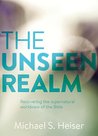
The Unseen Realm: Recovering the Supernatural Worldview of the BibleThe Unseen Realm: Recovering the Supernatural Worldview of the Bible by Michael S. Heiser
My rating: 3 of 5 stars

Challenging

This book is hard to rate. Primarily because some of the ideas presented challenges to my long held beliefs. This is a well researched and documented book, and Heiser is an expert on Hebrew language and culture.

I should also say that while many of my long held beliefs were challenged, in no way do I doubt Heisers faith or orthodoxy. Many of the beliefs I had challenged revolve around the spiritual realm, its inhabitants and hierarchy.

This is a good study for delving deeper into understanding the spiritual realm, which is something we all should do. We can not afford to pretend it does not exist. We also cannot rely on what we see on network TV, video games or greeting cards.

Heiser does make a strong case for the reality of the spiritual world. He also makes compelling arguments to rethink how we read the Bible. The epilogue goes a long way to remind us that we cannot read and understand the Bible without putting ourselves into the culture, mindset, language and understanding of the original people.

Read this book and be ready to have some long held ideas challenged. It is a good book, well researched and thorough. For me at times it was hard to follow but that may also say more about me the reader than Heiser the author

View all my reviews

Posted in Uncategorized | Leave a comment

Disrupted

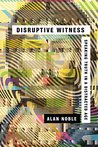
Disruptive Witness: Speaking Truth in a Distracted AgeDisruptive Witness: Speaking Truth in a Distracted Age by Alan Noble

My rating: 5 of 5 stars

Not What I Thought

First off, this book was not what I thought it was based on the title and an early portion I read in another review. That is OK since it was actually better than I expected.

Secondly, many of you may not like this book. I was not too happy having some of my well entrenched habits and ideas challenged. Be prepared to hear that the traditional VBS and christian T-shirt market may not be the best witness the church has at its disposal.

Noble makes it very clear. We live in a very secular, very distracted world. Our witness needs to disrupt peoples ideas of where fulfillment and identity come from. For many people Christianity is just one of a million choices you can base your identity. Hence, we are just one more t-shirt advertising our product, from our religion, to our politics, to our alma matter to our favorite athletic team. Its just another choice.

Noble argues that it is time for the church to disrupt that viewpoint, and he gives some very real examples and solutions. The chapters on personal life and corporate worship spoke the loudest. How do we frame our personal and corporate devotion to a transcendent God in a way that says this is not just one of a myriad of choices, but the only choice that makes sense of life, death, creation, joy, tragedy and all of the human experience.

Instead of trying to build the next big thing or the greatest show on earth Noble argues, quite effectively, for the need to practice contemplation and reflection. VBS is not about a cute video, decorations and crafts. Instead a lesson about creation should take your breath away and create a desire to experience creation and worship the creator. That is hard to do between short video clips, instagram posts and bouncing to the next activity.

Noble makes a strong case to return to some church traditions that have fallen out of practice, like the church calendar, liturgy and sabbath keeping. We can effectively disrupt the status quo when we stop “finding ourselves” in what we produce or consume and instead take time to think deep, reflect and contemplate on the God who disrupted history, entered our world and invites us to a better way.

I did notice that this book (as well as others lately) seem to draw heavily on Charles Taylor. Since I am unfamiliar with Taylors work I may need to visit his books soon.

As I read these comments I realize in this space I do not do justice to Noble’s work and would recommend that you read this for yourself, and expect to be disrupted.

If you’ll excuse me, I am going to try and walk upstairs and fight the temptation (distraction) of checking my phone to see what I might have missed since I last checked it 15 minutes ago.

View all my reviews

Posted in Uncategorized | Leave a comment

Didn’t See It Coming

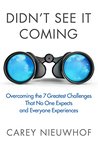
Didn't See It Coming: Overcoming the Seven Greatest Challenges That No One Expects and Everyone ExperiencesDidn’t See It Coming: Overcoming the Seven Greatest Challenges That No One Expects and Everyone Experiences by Carey Nieuwhof
My rating: 4 of 5 stars

See it now

I heard about this book while catching up on the 5 Leadership Questions podcast. It sounded like just what I was experiencing. Yes, these are issues that can derail a leader, but they are not the “big” ones we think of like abuse, adultery, and embezzlement. Yet I believe these issues eventually lead to the big ones. Fortunatly, each issue is not a lost cause, but if you can see it coming you can make the corrections. The author connects each issue with a plan to correct course.

The issues the author discusses are cynicism, compromise, disconnection, irrelevance, pride, burnout, and emptiness. I have to admit that during the podcast I heard myself being described by more than one issue and knew I needed to find out more. I am glad 5LQ brought Carey back for part 2 to finish the discussion.

This book is definitely worth the read. It is accessible and insightful, filled with enough personal stories and examples to make it practical and not just theoretical.

Carey does write from a Christian perspective (lawyer turned pastor) but the material here is relevant for anyone.

I do wish there was more application material for emptiness and mission but what is there is a good resource.

If you, like me, start seeing yourself in this material you will also see there is practical help. You don’t have to sink, but you can make course corrections. As Carey says do what you must today so you can thrive tomorrow.

View all my reviews

Posted in Review, Uncategorized | Leave a comment

Wisdom

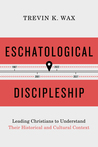
Eschatological Discipleship: Leading Christians to Understand Their Historical and Cultural ContextEschatological Discipleship: Leading Christians to Understand Their Historical and Cultural Context by Trevin Wax

My rating: 4 of 5 stars

At first glance I wondered what Eschatological Discipleship meant. After all, my church background was heavy on eschatology including charts, diagrams, and cheesy movies about the end of the world. For all those years eschatological discipleship would have meant, Jesus could be back any second now, do you want him to catch you doing whatever it is you are doing.

Fortunately, Trevin Wax never even came close to saying that. In this book eschatology means asking what time is it. Eschatological discipleship is a “…type of spiritual formation and obedience that takes into account the contemporary setting in which one finds himself.” P3. HE goes on and says “…spiritual formation that goes beyond adoption of personal spiritual disciplines or engagement in church related activities to a missionary encounter and confrontation with the world.” P3

The first part of the book Wax drills down deep into understanding worldviews, a definition of eschatology and discipleship. He then gives an extensive biblical precedent for eschatological discipleship. This area makes this book a solid, biblical understanding of this process making this more than just a how to book on discipleship. He also wants us to understand the difference between absolutes and non-absolutes when we understand what time it is. There is a lot of meat here to validate the need for eschatological discipleship.

In this early section the best part of the book was the section in chapter 3 discussing witness. Trevin makes a powerful case that witness is not something we do but someone we are. Witness is not a task but our identity. He states the activity of witnessing is birthed out of our identity as witnesses. This section alone makes the book a valuable resource.
The section on rival worldviews (Enlightenment, Sexual Revolution, Consumerism) were another strong point of the book. These chapters helped me to realize where we came from and how we got here. IT makes it much easier to understand the time we are in when we see how we got here. Instead of just a history lesson Wax provides tools to expose these contradictory worldviews and provide a way to flourish.

Eschatological Discipleship winds down with an evangelical look at discipleship and its common expressions he calls reproduction, personal piety, and gospel centered. Wax points out the pros and cons of each expression and the value of adding the eschatological discipleship element. He also provides tactics to have a missionary encounter in these areas.

This book was a tough read for me. Not because of the content but because there was so much packed into this volume. I had to take my time reading and digesting each section. In the end if you are looking for a deeper, long lasting definition for discipleship this is it.

You will not find 3 easy steps or 12-week studies here. Instead you will find the call to a healthy form of discipleship that will require you to put the hard work into fleshing this out in your life and context. But that’s is what makes it long lasting and what the purpose is anyway, to develop the wisdom that leads to light for living in Gods kingdom in your time and context.

A free copy was provided for review.

View all my reviews

Posted in Uncategorized | Leave a comment

Worldview Resource

CSB Worldview Study BibleCSB Worldview Study Bible by Anonymous

My rating: 4 of 5 stars

Holman Bible Publishers continue to produce quality bibles connected to the Christian Standard Bible. The CSB is a very readable, accessible translation and has become the flagship of Holman Bible Publishers. This review focuses on the Worldview Study Bible Edition.

Worldview has become a prominent topic these days. I first heard it back in the 1980’s while in Bible College and it seemed to be reserved for that environment. Through the years people like Chuck Colson, R.C Sproul and John Stonestreet have promoted this idea and it is much needed. Hopefully worldview is not the latest WWJD, Prayer of Jabez fad. Ideally the whole concept of worldview will save it from that fate.

This Bible is a great resource to keep many worldview forming tools in one place. The strength is these articles and teachings are connected to relevant scriptural passages and not just the writer’s opinions.

There are more articles than I wanted to take time to count, but topics from Medical Ethics, to Crime and Punishment to issues of sexuality, government, religion and evangelism are covered. Even if you are not out to become the next Chuck Colson or RC Sproul there are enough essays to address issues you are interested in or even questioning.

The list of contributors is also impressive. From Daniel Akin at Southeastern Baptist Theological Seminary to Mark Knoll of Notre Dame University there is plenty of scholarly research here. But it is not just scholarly. The articles and notes are clear, concise and accessible. There is also no hobby horse, one issue platforms here. The writers range from Seminary Leaders to Nursing School directors, Pastors to Scientists.

In a day where almost everything is accepted, and nothing is challenged this a timely resource. The user will find plenty of resources to build a filter to analyze issues that face us every day and make informed choices based on clear Biblical teaching.

Along with numerous essays on worldview issues there are plenty of study notes throughout the scriptural text to help the reader understand the text and its context.

These articles and notes are a valuable tool to reach any generation, in any time and place to give a solid basis to help navigate the time and context we find ourselves.

A free copy was provided for an honest review.

View all my reviews

Posted in Uncategorized | Leave a comment

The Kingdom of God

The Kingdom of God and the Glory of the CrossThe Kingdom of God and the Glory of the Cross by Patrick Schreiner

My rating: 5 of 5 stars

This is another volume in the Short Studies in Biblical Theology series from Crossway.

Like many I am sure I have been exposed to multiple interpretations on what is the Kingdom of God. Is it heaven, is it future? Is it now? Is it a combination of all of these? Schreiner does a great job of presenting the now, not yet aspect of the kingdom. The presence of the king inaugurates the kingdom, but it has not been fully realized.

Schreiner points out that kingdom language in Scripture is more than a physical location with national boundaries. Instead, in order to have a kingdom there are three qualities that define a kingdom. These qualities include power (the authority of the King) a people (the citizens) and a place. For believers this place is not just universal influence but will have a physical location. With these elements in place there is structure for the flourishing of the Kingdom.

After this introduction Schreiner works from Genesis to Revelation to show Scriptures unified message of this kingdom and its importance. Note that Schreiner uses the typical Jewish breakdown of the Old Testament of Law, writings and prophets and not our typical table of contents breakdown in current bibles.

Kingdom is the theme which all scripture revolves around.

The Law. Here the Kingdom hope thrives, is corrupted, and then revived. Adam administrate the kingdom God created to flourish. Mankind tries to build his own kingdom. Schreiner calls the kingdom a tree designed to grow. The Law waters the tree.

Then he moves to the Prophets. God will give land to Abraham descendants but it’s not the kingdom they’re waiting for. There is something better God has promised. For now, the tree is withering but there are righteous branches. Sin has led to captivity by another kingdom but there is always hope.

In the writings we are shown how to follow kings’ ways and live. Abandon HIs ways and we will die. Here we examine life in the kingdom. While we may be in exile but God is still in charge and will bring restoration. This is not just history but assurance. The Kingdom is still coming someday and will restore the people. God will make a place through a king for his people

After these three divisions of the Old Testament Schreiner moves into the New Testament.

Matthew shows us the place of kingdom. Here we see the uniting of the kingdom of heaven and earth. In Mark we see the power of the king revealed through service and suffering. These are not the typical markers of a king and his kingdom. In Luke we see King Jesus and the people of the kingdom. John shows us the otherworldy aspect of life in this kingdom

In Acts the resurrected King is defining and forming this new community of the king. The early church will continue the kingdom story. In sending the Holy Spirit the Kingdom advances by authority of kingdom empowered by the spirit and proclaimed by people.

The epistles speak of praising the king who rescues, and the justice of the king. The Kingdom is established through justice, for unity and consummated at return.

By the time we get to Revelation we see the revealing of the kingdom promised so long ago. This Kingdom is achieved by the power of God defeating the kingdoms enemies through His sacrificial death. The King shows his power for his people. He is establishing a place by removing the kingdoms opposed to the true king.

As true planted by water grows so does kingdom grow. Jesus dis announce the Kingdom is at hand (Mark 1:14-15). “All these pictures are of the kingdom. The kingdom is not simply social ethics, or heaven, or the church, or God’s sovereignty; the kingdom is much larger. Only when we connect the dots from the first page to the last do we begin to see that on every page the kingdom concerns the King, His people, and their place. At the center of this kingdom plan stands a wooden cross covered in blood.” (p142-143)

In the ends this volume is a great introduction to the Bible’s teaching on the Kingdom of God. While not an exhaustive, scholarly volume (it was not designed to be) it is a valuable survey. In the end the reader comes away realizing Christians are citizens of a kingdom, whose King has gone to the greatest of lengths to rescue His people and secure their place for eternity.

The publisher provided a copy at no charge in exchange for an honest review

View all my reviews

Posted in Uncategorized | Leave a comment

Becoming a Welcoming ChurchBecoming a Welcoming Church by Thom S. Rainer

My rating: 5 of 5 stars

Early in my ministry I was used to hearing churches say we are a friendly church. And this was partly true. They were very friendly to each other. But when I asked them what if we ask people who are not part of our church if we are friendly what would they say, especially the kids we shooed away from the porch for loitering. Were we that friendly. In this book Rainer challenges us to look at church hospitality with new eyes and as a gospel issue.

This small book is big on solid information and advice. In Becoming a Welcoming Church Rainer may not have a lot of “new” information he does remind us to look at some of what our church does from the perspective of a first-time visitor. Rainer does not shy away from addressing sacred cows like greeters, ushers, and that stand and greet one another moment. Rainer sees these as all potential strengths to building a welcoming church but they can also be detrimental to seeing guests return if they are not done well.

The biggest strength in this book is its emphasis that a welcoming church, a hospitable church is a gospel issue. This is one more way of serving our neighbor. Think of the first-time church goer who never returns to church because of the lack of hospitality they experience. He gives ample examples of those who were turned off by a lack of hospitality as well as those who came back and eventually responded to the gospel.

One area Rainer did mention that I never thought of was how uncomfortable visitors may feel in the moments just before the service starts. They may have been welcomed when they came in but once they find a seat they are ignored until the stand and greet time.

The other area I forget about is the quality of the sound and the brightness of the lighting. Hint. Dark rooms make it hard to read your Bible.

Another strength in this book is its updated perspective. Rainer stresses a current, up to date website, especially service times and activities. No one cares about the Easter service you had 3 weeks ago. Update the site. Rainer calls the church website the new front door of the church. He reminds us how important safety and security are to hospitality. The church should make it clear in both its website and other information how seriously they take the protection of their attendees and especially children. In today’s climate we cannot forget to let parents know how we plan to safeguard the children in our care. They should know this before they show up.

Other areas Rainer covered are good reminders. How clean is your space? How is your signage? Can people find the nursery and bathroom? How accurate is your information booth and it is manned? How are your holy huddles? Spoiler alert. 2 greeters talking to each other constitute a holy huddle and needs to be broken up so visitors can be tended to.

To sum it up Rainer reminds us we should be expecting guests and prepared for them when they arrive. We become too familiar, to used to what we see, and we forget what guests may experience.

The book also includes facility audit to evaluate your churches cleanliness and safety. There is also a survey you can give to a mystery guest, someone unaffiliated with your church you can invite to attend as a first-time visitor who would provide an honest evaluation.

Much of what is in the book is something most of us know but have forgotten over time. This is a good reminder.

There is one area I wish he could go deeper. What about those of us without permanent facilities, who meet in a school gym, who load and unload trailers, set up and tear down tables and chairs week after week and are also at the mercy of the landlord for certain challenges. I would like to see a little more advice or examples for those folks.

A review copy was provided free of charge by the publisher.

View all my reviews

Posted in Uncategorized | Leave a comment

Packed Full

Theophany: A Biblical Theology of God's AppearingTheophany: A Biblical Theology of God’s Appearing by Vern Sheridan Poythress

My rating: 4 of 5 stars

First of all let me say this book is PACKED with information and detail. I went in thinking I had a grasp on theophanies and was I surprised. Poythress has described and explained theophanies from Genesis to Revelation, most of which I never considered.

Admittedly the book started slow for me and I was having trouble tracking but I stuck with it and it was worth the effort. I would encourage you to stick with it specially through part 1 The Biblical Theme of God Appearing. Poythress gives a broad picture of theophany through Scripture as well as its importance.

Poythress defines a theophany as “represents an intensive form of the presence of God.” He notes that not all theophanies involve a physical manifestation of Gods presence but can be contained in words, images and other manifestations. Poythress then reviews different types of theophanies. These can include thunderstorms, clouds, fire, courtrooms scenes and warrior theophanies. Even unbelievers can experience a theophany as pointed out in Genesis 40 and 41 and Daniel 4

Poythress does point out that “in all theophanies, a clear distinction is in place between God the creator and the phenomena of creation. In other words God is in the cloud or burning bush but He is NOT the cloud or burning bush.

In this section Poythress notes that theophanies cover covenant, kingdom and promise. While I followed this progress I did have a lot of trouble following the many charts in this section and they did not aid me in my understanding. That may also be part of my learning style. This may have been better if I were sitting in a class setting

Next Poythress covers the mystery of theophanies. He states that “each form does reveal him and does communicate things about who He is and what He does.” In this section he expands his definition of theophany to state “an intense expression of the broader theme of God’s presence”.
Here we can have events where God Himself may not appear but a reflection of Gods presence in another person or event.

I do admit that at times, especially in the Psalms I question is this a theophany or a literary description of the Psalmists prayer

The next two sections survey each section of Scripture and at times book by book expounding on theophanies through Scripture. This served as an unpacking of section 1.
In the end this is a great reference book, especially for the student looking to go deeper into the revelation of God and His character through Scripture as well as the common theme of God revealing Himself to us in Scripture.

As Poythress concludes. “All of these passages function simultaneously in three ways. First, they reveal who God is. The manifest his character and his glory. Second, they reinforce the biblical teaching that God in His kindness and grace draws near to his people – he is “God” with us (Matt 1:23). Third, they stir up the expectation for that final coming and appearance of God, which will take place in the second coming of Christ and the consummate victory that his coming will bring.”

Publisher provided a review copy at no charge.

View all my reviews

Posted in Uncategorized | Leave a comment

You Won’t Be Sorry

The Apologetics Study Bible: Understand Why You BelieveThe Apologetics Study Bible: Understand Why You Believe by Anonymous

My rating: 4 of 5 stars

The Apologetics Study Bible is the latest addition from Holman and the Christian Standard Bible. As its name suggests this is a very specific type of study bible. Like all study bible, this a resource or tool. Still there is enough here for every reader, and every follower of Christ is an apologist.

As stated this resource is tied to the Christian Standard Bible, a very readable and reliable Bible translation. Like any very good reference Bible this one has lots of useful features. Each book of the Bible contains an introduction defining its authorship. Another feature of the introduction is a defense of the reliability of the book in the canon of Scripture. This is fitting for a resource focused on apologetics, defending the reliability of the source. Each introduction also contains a unique feature highlighting a specific issue of the book, from challenging myths to the importance of the book in the greater scope of Scripture. Fortunately, these introductions are just that and not a commentary. The reader is given just enough information to grasp the book. One minor note is there are no outlines provided for each book.

Throughout the text there are plenty of study notes to help illuminate and expand the readers understanding of the Biblical text itself.

The heart of this Bible is its apologetics resources. The lion’s share of the material is in articles spread throughout the text. The articles range from topics such as “Are the days of creation to be taken literally” to looks at Islam and sexuality. One of the strengths of these articles is they are not tied to specific political, social or other areas. Each article is tied to a scriptural text as its basis. Each article, whether it is about sexuality, science, or ethics is backed biblically.

The authors range from Russell Moore of the ERLC of the Southern Baptist Church to John Frame of Reformed Theological Seminary and the late Chuck Colson. There are plenty of these articles to cover most of the issues the church faces today. Along with top notch scholarship contributing these articles they are presented as readable and accessible to the reader. No Seminary degree or philosophy background needed.

The second notable feature is the twisted scripture index. R Alan Smith has brief comments on 20 passages of Scripture showing how various groups have taken scripture and twisted it to their own views. (See Genesis 1:2 and vampires for an example)

The final part I want to mention are the biographies. There are 12 articles introducing prominent apologists from church history. These biographies range from Augustine to C.S Lewis. While not extensive (a paragraph or so) they are sufficient to encourage the reader to read more about the person. The articles also encourage the reader that the church has wrestled with questions and successfully defended the faith for thousands of years.

This publication will not address every topic or answer every objection or question it is a solid, valuable resource to aid the reader to understand and defend the faith as well as give the believer confidence in the faith handed down throughout the ages

View all my reviews

Posted in Uncategorized | Leave a comment

Better THan a How to Manual

Recapturing the Wonder: Transcendent Faith in a Disenchanted WorldRecapturing the Wonder: Transcendent Faith in a Disenchanted World by Mike Cosper

My rating: 4 of 5 stars

I have really enjoyed this book. What I did not realize was this book was about the spiritual disciplines or habits. What made this book different for me was it is not a how to book. In the end this was not about being better at the disciplines but paying more attention to what is going on around us. Maybe if we were not so distracted we might be more amazed about what we see God doing in and around us.

Cosper does remind us that we need to spend the time in Scripture, prayer and worship to be able to pay attention. Instead of a how to Cosper does lay out pathways to help us incorporate these habits to make us more aware of the wonder around us.

What I appreciate about Cosper’s approach is that wonder is not dependent on the mountaintop experiences (they don’t satisfy) but on the awareness of the very real and present reality of Christ with us. While waiting for the tow truck, the doctors call or the job interview what we don’t need is a laser light show, thundering bass and fog machines but the assurance that Christ is with us. We become convinced of His presence in regular times of Scripture, prayer, worship, fellowship and even feasting.

In the end this is not a manual or how to on the Spiritual disciplines but a call to escape the distractions around us and see the wonder and power of God in our daily existence.

View all my reviews

Posted in Review | Leave a comment