Small Book Big Message

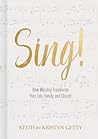
Sing!: How Worship Transforms Your Life, Family, and ChurchSing!: How Worship Transforms Your Life, Family, and Church by Keith Getty

My rating: 5 of 5 stars

Sing is a small book from Keith Getty. And like the title says it is call to the church to Sing. AS Getty says, our spiritual life depends on it. This is a small book with a bog argument. Christians, we are called to sing regardless of our talent and skill. Getty, quoting Ligon Duncan says There is no more part of the worship life more in need of reformation today than congregational singing.

Getty is quick to point out this is encouragement not prescription. Singing takes many forms, styles, preferences, skill levels and all that. What is important is we sing. He encourages us that since we sing to encourage and praise, not to impress and earn praise, we can smile and sing anyway.

Singing is one of the ways we created ones are given to communicate with the creator. In fact, it is both a gift and a command. In fact, there are over 50 commands to sing. To not sing is to disobey. We are not commanded to sing well; we are commanded to sing. And the command is not to sing alone in the shower or the car but in the assembly of the saints. When you are with the church, sing.

What do we sing? We sing the Word of God. Think about what you are singing. What does your song reveal about your God and Savior? What does your song reveal about you? Are you thankful? Songs express a grateful heart. What (who) do you love? Your song expresses your love.

Has God made Himself know to you? Respond with a song. Is your heart broken? Is your burden heavy or your sin persistent? Sing. Pour it out to God and His people. Encourage others with your sing and be encouraged by theirs.

And think of the testimony to people from cross generations, and preferences and social status standing side by side singing one song of praise.

There is a sign at Moody Radio saying Your song may be used to save a soul. Sing it prayerfully. A nd sing the truth of the gospel. No need to disguise it in ambiguous language. Sing a song to be heard. For faith comes by hearing and hearing by the word of God.

This little book packs a powerful message. Getty encourages us that we have a reason to sing, we have a song to sing. We have a voice to sing. So Sing.

The publisher provided a copy of this book for review.

View all my reviews

Posted in Uncategorized | Leave a comment

Packed Full

Reformed Preaching: Proclaiming God's Word from the Heart of the Preacher to the Heart of His PeopleReformed Preaching: Proclaiming God’s Word from the Heart of the Preacher to the Heart of His People by Joel R. Beeke

My rating: 4 of 5 stars

First of all I am glad I read the Kindle version. I feel that if I saw the physical copy of this book I may have turned away. The volume is chock full of material. In typical Beeke fashion this volume is well researched, well documented and well presented. This is not just a book on how to write a sermon.

I was also intrigued by the title as I am used to seeing books about expository preaching, topical preaching, extemporaneous preaching, preaching to felt needs etc. My first wrong assumption was a book on Reformed Preaching is a book about intellectual, conservative lectures.
Beeke points out that Reformed Preaching is Experiential preaching. By that he says It uses the truth of Scripture to shine glory of God into the depths of the soul to call people to live solely and wholly for God . . stresses the need to know the great truths of the Word of God by personal experience. It also tests our personal experience by the doctrines of the Bible.

The goal is not head knowledge (that is important) but also heart change. He says Head knowledge is not evil in itself. Most of the great Christian ministers and leaders of the Reformation and Post-reformation eras were highly educated men. They valued a thorough Christian education. But this education must be sanctified by the Holy Spirit to our hearts. Head knowledge remains insufficient for our spiritual good without the Spirits’s heart application. That is why writers of previous centuries counseled people to seek to fill their heads with knowledge while seeking the Lord in hope that he would bless it to their hearts.

I appreciate the fact that Beeke drives home the fact that Reformed Preaching is well researched but also fueled by the Holy Spirit. I was impressed by the heavy emphasis on the place Beeke placed on the Holy Spirit’s place in the preparation, delivery and reception of the sermon.

After defining Reformed Preaching Beeke present a historical picture of Reformed Preaching, giving examples of preachers, their ministries and their messages. Some names are very familiar and many more names unknown. In the end Beeke shows the rich heritage of Reformed Preaching worldwide, even if we never knew that was what it was called. I will admit that I almost gave up at this point. There were so many examples over a long history, I thought this book was a history of Reformed Preachers. Fortunately, I kept going.

Part 3 is a great section. Here Beeke starts unpacking sermon development. This is not a process of how often to read the text, then the studies, commentaries application etc. Beeke stresses deeper issues. Things like the character and quality of the preacher and how deeply he knows His God. How deeply does he know his congregation? How intimate is the preacher with the Scripture? The preacher is called to know His God, the Scripture and the congregation. Then the preacher can take the text, draw out the biblical doctrines and address it to the spiritual health of his congregation.
Beeke says Christian preaching must revolve around the objective focus of the truth about God in Christ and His saving work accomplished for His people. …preaching must also revolve around the subjective focus of the experience of God in Christ.

The heart of the sermon is how reliant was the preacher on the Holy Spirit and how much did the Spirit fuel the sermon to reveal Christ to the hearer. Maybe if more sermons were rooted in biblical doctrine applied to the spiritual needs of people we would get past twitter feed sermons about feeling good about yourself and see hearts transformed towards holiness and Christlike qualities.
Beeke says we need to preach sermons enriched by all of these elements: biblical, doctrinal, experiential, and practical. Then Beeke adds to the final chapters examples of topics to explore and questions to ask as the Scripture if finally applied to meet the truth of God and the experience of the hearer.

If you are involved in sermon preparation and feeding the sheep, this is a must read. If you are like me and struggle with the amount of historical content press on. It is worth it.

The publisher provided a copy for review.

View all my reviews

Posted in Uncategorized | Leave a comment

Relevant

All That's Good: Recovering the Lost Art of DiscernmentAll That’s Good: Recovering the Lost Art of Discernment by Hannah Anderson
My rating: 4 of 5 stars

This book is set to be a book on discernment. Anderson takes a slightly different approach. She unpacks Philippians 4 and sifting your thoughts through this filter. Instead of an academic approach to a transformed mind this book is a more conversational, relatable call to discernment. Anderson defines discernment as “. . . , discernment is the ability to sort between a host of options and pick what is good.”

I appreciate her goal to “lead you away from our common disposition to fear-based thinking toward a place of hope and abundance.” She seeks to tackle the common “How can I know who and what to believe? How can I make choices that lead to a successful life? How can I avoid mistakes? How can I know what is good?”

To her credit the author does not offer up a simple 3 steps or 7 keys of what to think.

Along with a solid breakdown of Philippians 4 Anderson provides plenty of down to earth anecdotal and personal examples to make discernment practical and realistic. For me personally the chapter on purity and the chapter on what is commendable are fitting for today’s climate of the me too movement and the world of fake news.

We are reminded that the digital age information and knowledge are not the same thing. “Because we are literally creating data in real time, we must exercise greater care in what we choose to add to the conversation and how we react to what others contribute. More than ever, we must develop the discernment that recognizes that not every shared idea is a good idea, nor is every idea worth sharing”

We are encouraged to acknowledge that discernment is a spiritual exercise AND there is objective truth to pursue while also clinging to faith. “Basing truth in objective reality—making sure that we check our facts, do our research, and confirm the truthfulness of something before we accept it—does not minimize the importance of the unseen realm. But it does safeguard us from letting our private, personal experience of the world dominate.”

My one concern was I wish there had been more emphasis on the falleness infecting our world and how easily we are deceived. At times it felt like the world was painted as a good place with some issues instead of a world infected with the curse that needs to be broken and redeemed. Anderson does not paint a picture of a world full of unicorns and rainbows. She explains that the qualities of Philippians 4 describe the character of God. Again that is just my one minor concern and in no way should detract from the practical usefulness of this work

View all my reviews

Posted in Uncategorized | Leave a comment

Challenging

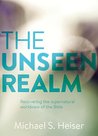
The Unseen Realm: Recovering the Supernatural Worldview of the BibleThe Unseen Realm: Recovering the Supernatural Worldview of the Bible by Michael S. Heiser
My rating: 3 of 5 stars

Challenging

This book is hard to rate. Primarily because some of the ideas presented challenges to my long held beliefs. This is a well researched and documented book, and Heiser is an expert on Hebrew language and culture.

I should also say that while many of my long held beliefs were challenged, in no way do I doubt Heisers faith or orthodoxy. Many of the beliefs I had challenged revolve around the spiritual realm, its inhabitants and hierarchy.

This is a good study for delving deeper into understanding the spiritual realm, which is something we all should do. We can not afford to pretend it does not exist. We also cannot rely on what we see on network TV, video games or greeting cards.

Heiser does make a strong case for the reality of the spiritual world. He also makes compelling arguments to rethink how we read the Bible. The epilogue goes a long way to remind us that we cannot read and understand the Bible without putting ourselves into the culture, mindset, language and understanding of the original people.

Read this book and be ready to have some long held ideas challenged. It is a good book, well researched and thorough. For me at times it was hard to follow but that may also say more about me the reader than Heiser the author

View all my reviews

Posted in Uncategorized | Leave a comment

Disrupted

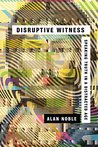
Disruptive Witness: Speaking Truth in a Distracted AgeDisruptive Witness: Speaking Truth in a Distracted Age by Alan Noble

My rating: 5 of 5 stars

Not What I Thought

First off, this book was not what I thought it was based on the title and an early portion I read in another review. That is OK since it was actually better than I expected.

Secondly, many of you may not like this book. I was not too happy having some of my well entrenched habits and ideas challenged. Be prepared to hear that the traditional VBS and christian T-shirt market may not be the best witness the church has at its disposal.

Noble makes it very clear. We live in a very secular, very distracted world. Our witness needs to disrupt peoples ideas of where fulfillment and identity come from. For many people Christianity is just one of a million choices you can base your identity. Hence, we are just one more t-shirt advertising our product, from our religion, to our politics, to our alma matter to our favorite athletic team. Its just another choice.

Noble argues that it is time for the church to disrupt that viewpoint, and he gives some very real examples and solutions. The chapters on personal life and corporate worship spoke the loudest. How do we frame our personal and corporate devotion to a transcendent God in a way that says this is not just one of a myriad of choices, but the only choice that makes sense of life, death, creation, joy, tragedy and all of the human experience.

Instead of trying to build the next big thing or the greatest show on earth Noble argues, quite effectively, for the need to practice contemplation and reflection. VBS is not about a cute video, decorations and crafts. Instead a lesson about creation should take your breath away and create a desire to experience creation and worship the creator. That is hard to do between short video clips, instagram posts and bouncing to the next activity.

Noble makes a strong case to return to some church traditions that have fallen out of practice, like the church calendar, liturgy and sabbath keeping. We can effectively disrupt the status quo when we stop “finding ourselves” in what we produce or consume and instead take time to think deep, reflect and contemplate on the God who disrupted history, entered our world and invites us to a better way.

I did notice that this book (as well as others lately) seem to draw heavily on Charles Taylor. Since I am unfamiliar with Taylors work I may need to visit his books soon.

As I read these comments I realize in this space I do not do justice to Noble’s work and would recommend that you read this for yourself, and expect to be disrupted.

If you’ll excuse me, I am going to try and walk upstairs and fight the temptation (distraction) of checking my phone to see what I might have missed since I last checked it 15 minutes ago.

View all my reviews

Posted in Uncategorized | Leave a comment

Didn’t See It Coming

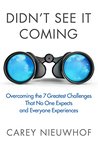
Didn't See It Coming: Overcoming the Seven Greatest Challenges That No One Expects and Everyone ExperiencesDidn’t See It Coming: Overcoming the Seven Greatest Challenges That No One Expects and Everyone Experiences by Carey Nieuwhof
My rating: 4 of 5 stars

See it now

I heard about this book while catching up on the 5 Leadership Questions podcast. It sounded like just what I was experiencing. Yes, these are issues that can derail a leader, but they are not the “big” ones we think of like abuse, adultery, and embezzlement. Yet I believe these issues eventually lead to the big ones. Fortunatly, each issue is not a lost cause, but if you can see it coming you can make the corrections. The author connects each issue with a plan to correct course.

The issues the author discusses are cynicism, compromise, disconnection, irrelevance, pride, burnout, and emptiness. I have to admit that during the podcast I heard myself being described by more than one issue and knew I needed to find out more. I am glad 5LQ brought Carey back for part 2 to finish the discussion.

This book is definitely worth the read. It is accessible and insightful, filled with enough personal stories and examples to make it practical and not just theoretical.

Carey does write from a Christian perspective (lawyer turned pastor) but the material here is relevant for anyone.

I do wish there was more application material for emptiness and mission but what is there is a good resource.

If you, like me, start seeing yourself in this material you will also see there is practical help. You don’t have to sink, but you can make course corrections. As Carey says do what you must today so you can thrive tomorrow.

View all my reviews

Posted in Review, Uncategorized | Leave a comment

Wisdom

Eschatological Discipleship: Leading Christians to Understand Their Historical and Cultural ContextEschatological Discipleship: Leading Christians to Understand Their Historical and Cultural Context by Trevin Wax

My rating: 4 of 5 stars

At first glance I wondered what Eschatological Discipleship meant. After all, my church background was heavy on eschatology including charts, diagrams, and cheesy movies about the end of the world. For all those years eschatological discipleship would have meant, Jesus could be back any second now, do you want him to catch you doing whatever it is you are doing.

Fortunately, Trevin Wax never even came close to saying that. In this book eschatology means asking what time is it. Eschatological discipleship is a “…type of spiritual formation and obedience that takes into account the contemporary setting in which one finds himself.” P3. HE goes on and says “…spiritual formation that goes beyond adoption of personal spiritual disciplines or engagement in church related activities to a missionary encounter and confrontation with the world.” P3

The first part of the book Wax drills down deep into understanding worldviews, a definition of eschatology and discipleship. He then gives an extensive biblical precedent for eschatological discipleship. This area makes this book a solid, biblical understanding of this process making this more than just a how to book on discipleship. He also wants us to understand the difference between absolutes and non-absolutes when we understand what time it is. There is a lot of meat here to validate the need for eschatological discipleship.

In this early section the best part of the book was the section in chapter 3 discussing witness. Trevin makes a powerful case that witness is not something we do but someone we are. Witness is not a task but our identity. He states the activity of witnessing is birthed out of our identity as witnesses. This section alone makes the book a valuable resource.
The section on rival worldviews (Enlightenment, Sexual Revolution, Consumerism) were another strong point of the book. These chapters helped me to realize where we came from and how we got here. IT makes it much easier to understand the time we are in when we see how we got here. Instead of just a history lesson Wax provides tools to expose these contradictory worldviews and provide a way to flourish.

Eschatological Discipleship winds down with an evangelical look at discipleship and its common expressions he calls reproduction, personal piety, and gospel centered. Wax points out the pros and cons of each expression and the value of adding the eschatological discipleship element. He also provides tactics to have a missionary encounter in these areas.

This book was a tough read for me. Not because of the content but because there was so much packed into this volume. I had to take my time reading and digesting each section. In the end if you are looking for a deeper, long lasting definition for discipleship this is it.

You will not find 3 easy steps or 12-week studies here. Instead you will find the call to a healthy form of discipleship that will require you to put the hard work into fleshing this out in your life and context. But that’s is what makes it long lasting and what the purpose is anyway, to develop the wisdom that leads to light for living in Gods kingdom in your time and context.

A free copy was provided for review.

View all my reviews

Posted in Uncategorized | Leave a comment

Worldview Resource

CSB Worldview Study BibleCSB Worldview Study Bible by Anonymous

My rating: 4 of 5 stars

Holman Bible Publishers continue to produce quality bibles connected to the Christian Standard Bible. The CSB is a very readable, accessible translation and has become the flagship of Holman Bible Publishers. This review focuses on the Worldview Study Bible Edition.

Worldview has become a prominent topic these days. I first heard it back in the 1980’s while in Bible College and it seemed to be reserved for that environment. Through the years people like Chuck Colson, R.C Sproul and John Stonestreet have promoted this idea and it is much needed. Hopefully worldview is not the latest WWJD, Prayer of Jabez fad. Ideally the whole concept of worldview will save it from that fate.

This Bible is a great resource to keep many worldview forming tools in one place. The strength is these articles and teachings are connected to relevant scriptural passages and not just the writer’s opinions.

There are more articles than I wanted to take time to count, but topics from Medical Ethics, to Crime and Punishment to issues of sexuality, government, religion and evangelism are covered. Even if you are not out to become the next Chuck Colson or RC Sproul there are enough essays to address issues you are interested in or even questioning.

The list of contributors is also impressive. From Daniel Akin at Southeastern Baptist Theological Seminary to Mark Knoll of Notre Dame University there is plenty of scholarly research here. But it is not just scholarly. The articles and notes are clear, concise and accessible. There is also no hobby horse, one issue platforms here. The writers range from Seminary Leaders to Nursing School directors, Pastors to Scientists.

In a day where almost everything is accepted, and nothing is challenged this a timely resource. The user will find plenty of resources to build a filter to analyze issues that face us every day and make informed choices based on clear Biblical teaching.

Along with numerous essays on worldview issues there are plenty of study notes throughout the scriptural text to help the reader understand the text and its context.

These articles and notes are a valuable tool to reach any generation, in any time and place to give a solid basis to help navigate the time and context we find ourselves.

A free copy was provided for an honest review.

View all my reviews

Posted in Uncategorized | Leave a comment

The Kingdom of God

The Kingdom of God and the Glory of the CrossThe Kingdom of God and the Glory of the Cross by Patrick Schreiner

My rating: 5 of 5 stars

This is another volume in the Short Studies in Biblical Theology series from Crossway.

Like many I am sure I have been exposed to multiple interpretations on what is the Kingdom of God. Is it heaven, is it future? Is it now? Is it a combination of all of these? Schreiner does a great job of presenting the now, not yet aspect of the kingdom. The presence of the king inaugurates the kingdom, but it has not been fully realized.

Schreiner points out that kingdom language in Scripture is more than a physical location with national boundaries. Instead, in order to have a kingdom there are three qualities that define a kingdom. These qualities include power (the authority of the King) a people (the citizens) and a place. For believers this place is not just universal influence but will have a physical location. With these elements in place there is structure for the flourishing of the Kingdom.

After this introduction Schreiner works from Genesis to Revelation to show Scriptures unified message of this kingdom and its importance. Note that Schreiner uses the typical Jewish breakdown of the Old Testament of Law, writings and prophets and not our typical table of contents breakdown in current bibles.

Kingdom is the theme which all scripture revolves around.

The Law. Here the Kingdom hope thrives, is corrupted, and then revived. Adam administrate the kingdom God created to flourish. Mankind tries to build his own kingdom. Schreiner calls the kingdom a tree designed to grow. The Law waters the tree.

Then he moves to the Prophets. God will give land to Abraham descendants but it’s not the kingdom they’re waiting for. There is something better God has promised. For now, the tree is withering but there are righteous branches. Sin has led to captivity by another kingdom but there is always hope.

In the writings we are shown how to follow kings’ ways and live. Abandon HIs ways and we will die. Here we examine life in the kingdom. While we may be in exile but God is still in charge and will bring restoration. This is not just history but assurance. The Kingdom is still coming someday and will restore the people. God will make a place through a king for his people

After these three divisions of the Old Testament Schreiner moves into the New Testament.

Matthew shows us the place of kingdom. Here we see the uniting of the kingdom of heaven and earth. In Mark we see the power of the king revealed through service and suffering. These are not the typical markers of a king and his kingdom. In Luke we see King Jesus and the people of the kingdom. John shows us the otherworldy aspect of life in this kingdom

In Acts the resurrected King is defining and forming this new community of the king. The early church will continue the kingdom story. In sending the Holy Spirit the Kingdom advances by authority of kingdom empowered by the spirit and proclaimed by people.

The epistles speak of praising the king who rescues, and the justice of the king. The Kingdom is established through justice, for unity and consummated at return.

By the time we get to Revelation we see the revealing of the kingdom promised so long ago. This Kingdom is achieved by the power of God defeating the kingdoms enemies through His sacrificial death. The King shows his power for his people. He is establishing a place by removing the kingdoms opposed to the true king.

As true planted by water grows so does kingdom grow. Jesus dis announce the Kingdom is at hand (Mark 1:14-15). “All these pictures are of the kingdom. The kingdom is not simply social ethics, or heaven, or the church, or God’s sovereignty; the kingdom is much larger. Only when we connect the dots from the first page to the last do we begin to see that on every page the kingdom concerns the King, His people, and their place. At the center of this kingdom plan stands a wooden cross covered in blood.” (p142-143)

In the ends this volume is a great introduction to the Bible’s teaching on the Kingdom of God. While not an exhaustive, scholarly volume (it was not designed to be) it is a valuable survey. In the end the reader comes away realizing Christians are citizens of a kingdom, whose King has gone to the greatest of lengths to rescue His people and secure their place for eternity.

The publisher provided a copy at no charge in exchange for an honest review

View all my reviews

Posted in Uncategorized | Leave a comment

Becoming a Welcoming ChurchBecoming a Welcoming Church by Thom S. Rainer

My rating: 5 of 5 stars

Early in my ministry I was used to hearing churches say we are a friendly church. And this was partly true. They were very friendly to each other. But when I asked them what if we ask people who are not part of our church if we are friendly what would they say, especially the kids we shooed away from the porch for loitering. Were we that friendly. In this book Rainer challenges us to look at church hospitality with new eyes and as a gospel issue.

This small book is big on solid information and advice. In Becoming a Welcoming Church Rainer may not have a lot of “new” information he does remind us to look at some of what our church does from the perspective of a first-time visitor. Rainer does not shy away from addressing sacred cows like greeters, ushers, and that stand and greet one another moment. Rainer sees these as all potential strengths to building a welcoming church but they can also be detrimental to seeing guests return if they are not done well.

The biggest strength in this book is its emphasis that a welcoming church, a hospitable church is a gospel issue. This is one more way of serving our neighbor. Think of the first-time church goer who never returns to church because of the lack of hospitality they experience. He gives ample examples of those who were turned off by a lack of hospitality as well as those who came back and eventually responded to the gospel.

One area Rainer did mention that I never thought of was how uncomfortable visitors may feel in the moments just before the service starts. They may have been welcomed when they came in but once they find a seat they are ignored until the stand and greet time.

The other area I forget about is the quality of the sound and the brightness of the lighting. Hint. Dark rooms make it hard to read your Bible.

Another strength in this book is its updated perspective. Rainer stresses a current, up to date website, especially service times and activities. No one cares about the Easter service you had 3 weeks ago. Update the site. Rainer calls the church website the new front door of the church. He reminds us how important safety and security are to hospitality. The church should make it clear in both its website and other information how seriously they take the protection of their attendees and especially children. In today’s climate we cannot forget to let parents know how we plan to safeguard the children in our care. They should know this before they show up.

Other areas Rainer covered are good reminders. How clean is your space? How is your signage? Can people find the nursery and bathroom? How accurate is your information booth and it is manned? How are your holy huddles? Spoiler alert. 2 greeters talking to each other constitute a holy huddle and needs to be broken up so visitors can be tended to.

To sum it up Rainer reminds us we should be expecting guests and prepared for them when they arrive. We become too familiar, to used to what we see, and we forget what guests may experience.

The book also includes facility audit to evaluate your churches cleanliness and safety. There is also a survey you can give to a mystery guest, someone unaffiliated with your church you can invite to attend as a first-time visitor who would provide an honest evaluation.

Much of what is in the book is something most of us know but have forgotten over time. This is a good reminder.

There is one area I wish he could go deeper. What about those of us without permanent facilities, who meet in a school gym, who load and unload trailers, set up and tear down tables and chairs week after week and are also at the mercy of the landlord for certain challenges. I would like to see a little more advice or examples for those folks.

A review copy was provided free of charge by the publisher.

View all my reviews

Posted in Uncategorized | Leave a comment