
The True Vine
Have you ever felt like you’re doing all the right things but not making any progress? You’re busy, you’re trying, you’re working hard, but somehow you feel stuck. In John 15, Jesus gives an illustration that explains why some people flourish while others slowly wither—and it has nothing to do with trying harder.
I Am the True Vine (John 15)
In John 15, Jesus doesn’t tell us to try harder, work harder, or become better people. He tells us something far more important: “I am the true vine.” The Christian life isn’t about how hard you work or how much you do—it’s about abiding in Christ. It’s about who you are connected to. It is about what He has done, not what you do.
This is the last of the seven “I Am” statements of Jesus in the Gospel of John.
Like the previous statement, “I am the way, and the truth, and the life,” this is not a public declaration before the crowds. It takes place in the Upper Room, where Jesus and the Twelve have gathered to observe the Passover meal. Within hours, Jesus will be arrested, falsely accused, unjustly condemned, and crucified.
The disciples are stunned by what they are hearing. Their world is being turned upside down. Yet none of this catches Jesus by surprise. He knows exactly what is coming. He has been preparing for this moment from eternity past. He is going willingly to the cross to accomplish the mission the Father has given Him—to glorify the Father through the salvation of many people.
In these final hours, Jesus is preparing His disciples for life after His death, resurrection, and ascension. He is teaching them—and us—what a true disciple looks like.
John 14 closes with Jesus saying:
“You heard me say to you, ‘I am going away, and I will come to you.’ If you loved me, you would have rejoiced, because I am going to the Father, for the Father is greater than I. And now I have told you before it takes place, so that when it does take place you may believe. I will no longer talk much with you, for the ruler of this world is coming. He has no claim on me, but I do as the Father has commanded me, so that the world may know that I love the Father. Rise, let us go from here.”
— John 14:28-31 (ESV)
Then Jesus says:
“I am the true vine, and my Father is the vinedresser.”
— John 15:1 (ESV)
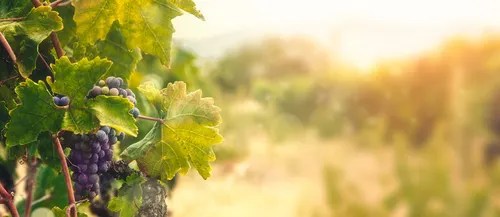
Notice the word true. If Jesus is the true vine, then there must be false vines as well. There are many things people attach themselves to in search of life, purpose, and fulfillment, but only Christ can connect us to God, save us, and produce genuine spiritual fruit.
Jesus’ hearers would have immediately understood this imagery. In Isaiah 5, Israel is described as God’s vineyard, planted and cultivated by Him with the expectation of fruit. Yet instead of producing good grapes, Israel produced wild grapes.
The imagery would have been familiar not only from Scripture but also from everyday life, as vineyards surrounded much of the countryside.
Understanding the Imagery
Jesus begins with a simple picture.
Branches do not produce life. The vine does.
A branch only bears fruit if it remains connected to the vine. The vine only flourishes because it is rooted and nourished.
When a vine is left sprawling along the ground, its branches become dirty, diseased, and unproductive. A good vinedresser removes dead branches and throws them away because they serve no purpose beyond firewood.
He also lifts healthy branches from the dirt and supports them with a trellis so they can grow and bear fruit. At times, he prunes away unnecessary shoots that consume resources but produce nothing. By cutting away what hinders growth, he directs the vine’s strength toward fruitful production.
Jesus then applies this imagery to His people.
Apart from Christ, There Is No Fruit
The first lesson is simple: disconnected branches bear no fruit.
A branch may look healthy for a time, but once severed from the vine, it begins to die. Every gardener knows this.
Jesus says:
“I am the vine; you are the branches. Whoever abides in me and I in him, he it is that bears much fruit, for apart from me you can do nothing.”
— John 15:5 (ESV)
Notice how absolute His statement is.
Not “you can do a little.”
Not “you can do less.”
“You can do nothing.”
Before we go further, we should ask: What fruit is Jesus talking about?
Paul gives us a helpful description in Galatians:
“But the fruit of the Spirit is love, joy, peace, patience, kindness, goodness, faithfulness, gentleness, self-control.”
— Galatians 5:22-23 (ESV)
We could also talk about reproducing more disciples, which again can only be done by being connected to the vine. But for this conversation I will stick to these types of fruit.
In John 15, Jesus repeatedly emphasizes love, obedience, and abiding in Him. To bear fruit is to love God, love others, obey Christ, and increasingly display the character that the Holy Spirit produces in believers.
Fruit is not merely activity. Fruit is transformed character flowing from a transformed heart.
Christ Produces the Fruit
Jesus makes it clear that fruit-bearing begins with Him.
He says the disciples are already clean because of the word He has spoken to them. Later, John writes:
“If we confess our sins, he is faithful and just to forgive us our sins and to cleanse us from all unrighteousness.”
— 1 John 1:9 (ESV)
We do not clean ourselves up before coming to Christ.
A grapevine does not plant itself.
A dead person cannot perform CPR on himself.
Likewise, sinners cannot save themselves.
Christ cleanses us when we come to Him in repentance and faith. The work of salvation is His from beginning to end and settled a the cross, resurrection, ascension and eventual return.
What Does It Mean to Abide?
The key word throughout this passage is abide.
To abide means to remain, to stay, to dwell with someone.
Jesus says we abide in Him, and He abides in us.
He further explains that His words abide in us. This means that Scripture shapes our thinking, directs our decisions, convicts our sins, comforts our sorrows, and renews our minds.
Not the Bible as we wish it were. A Pollyanna that only says nice things about us
Not the Bible edited to fit our preferences.
Not a collection of inspirational quotes.
The Word of God as God has given it.
If our connection to Christ is like a branch connected to a vine, then Scripture is like the life-giving flow that naturally accompanies that connection.
Jesus speaks to us through His Word.
We respond through prayer.
And we abide
The Holy Spirit illuminates the Word and reveals Christ to us. Through these ordinary means of grace, we abide in Him.
Jesus says:
“Abide in my love.”
And then He immediately explains what that means:
“If you keep my commandments, you will abide in my love.”
— John 15:10 (ESV)
Abiding is not sentimentality. It is obedience born out of love.
And we can’t know His commandments if we don’t know His word.
Verses 12-16 reinforce the truth that friendship with Christ expresses itself in submission to His Word.
Notice what Jesus never says.
He never says, “Try harder.”
He never says, “Do more.”
Instead, He continually points us back to relationship, trust, dependence, and communion with Him.
The Necessity of the Local Church
Healthy vines need support structures.
They need a trellis.
God has provided a support structure for believers as well: the local church.
Throughout the New Testament, believers are gathered into local congregations devoted to the apostles’ teaching, fellowship, prayer, worship, and shepherding by elders and deacons.
Grapes do not grow as isolated individuals. They grow in clusters.
The Christian life was never intended to be lived alone.
While we are connected to Christ, we are also connected to one another. We need a faithful, Bible-believing church that encourages us, corrects us, supports us, and receives our support in return.
The Painful Work of Pruning
None of this is painless.
The Christian life is not a perpetual field of sunshine and comfort.
There is pruning.
There is weeding.
There is cutting.
There is harvesting.
But none of it is without purpose.
The Father, the divine Vinedresser, uses every tool at His disposal to remove what hinders our growth so that we may bear greater fruit.
Sometimes we experience dry seasons.
Discouraging seasons.
Difficult seasons.
During those times it is worth asking:
Am I neglecting communion with Christ, the source of life?
Have I become entangled in the dirt of worldly distractions and sin?
Is the Father pruning away something that is hindering my growth?
Every believer experiences these seasons. Yet we endure them knowing that the Vinedresser is producing a harvest far greater than we can presently see.
The Fruit of Union with Christ
A disciple of Jesus bears fruit because it is the natural result of being united to Christ.
The life of the vine flows into the branches.
Break that connection, and the fruit withers.
The life of Christ flows through every believer.
Apart from Him, we can do nothing that pleases God.
Certainly, we can sing in the choir, give offerings, attend Bible studies, serve on committees, hand out bulletins, or participate in church programs.
But if those things are disconnected from Christ, they are merely acts of human effort.
They may impress people.
They do not impress God.
The fruit God desires is not self-righteous activity but Spirit-produced transformation.
Jesus is not merely a vine.
He is the Vine.
The one source of spiritual life.
Time does not allow us to explore the entire chapter, but John 15 also highlights several additional fruits of abiding in Christ:
- Answered prayer
- Full and lasting joy
- Sacrificial love
If those realities are absent from our lives, perhaps we need to examine whether we are truly connected to the Vine or merely attached to a powerless substitute.
Conclusion
Let me close with this
“If you are connected to the vine, God is going to do whatever it takes to cause you to bear fruit. God will cut you and prune you and trim you and chop you. He is not content to let you stay on the vine bearing little fruit. God is ruthlessly determined to shape you into something much better and more beautiful than you are right now. He is determined to make you more like his Son Jesus. The only way that will happen is through cutting away the parts that are dying so you can grow more and more healthy. God’s commitment to your fruit bearing is greater than your commitment to comfort. God will do whatever it takes for you to bear fruit.”[1]
[1] Carter, M., & Wredberg, J. (2017). Exalting Jesus in John (p. 305). Holman Reference.
 Common Man Faith