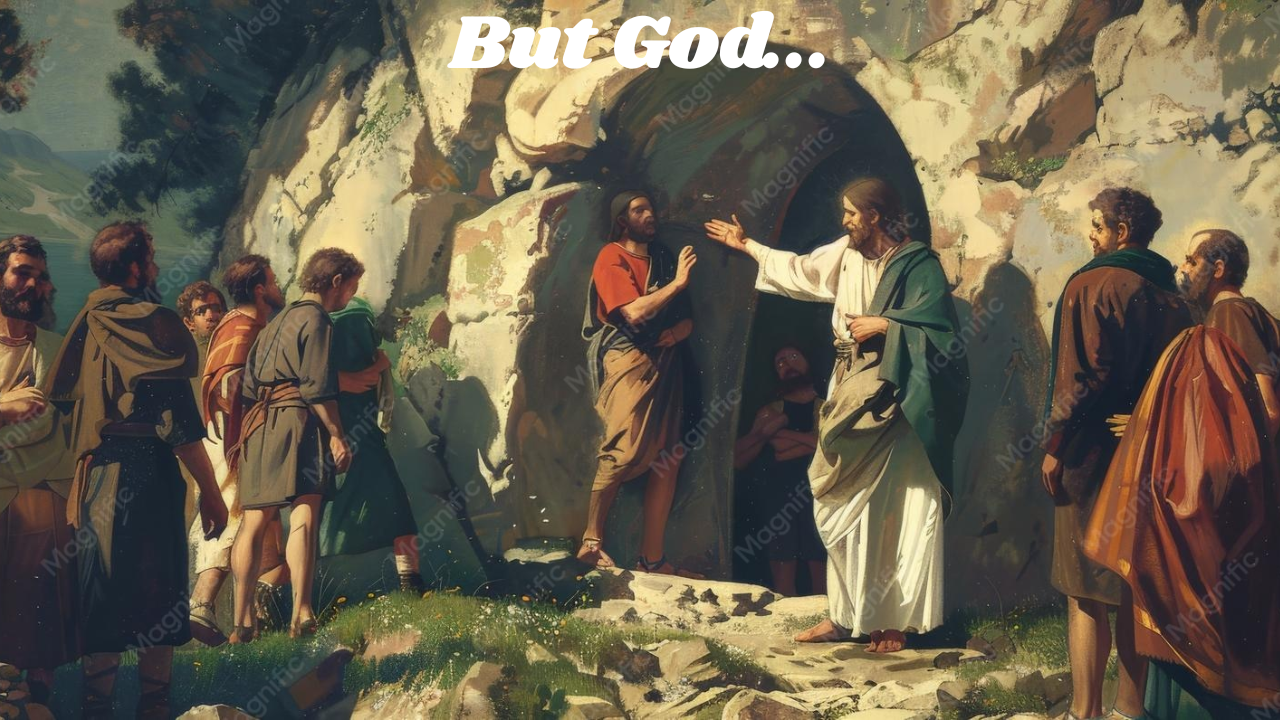
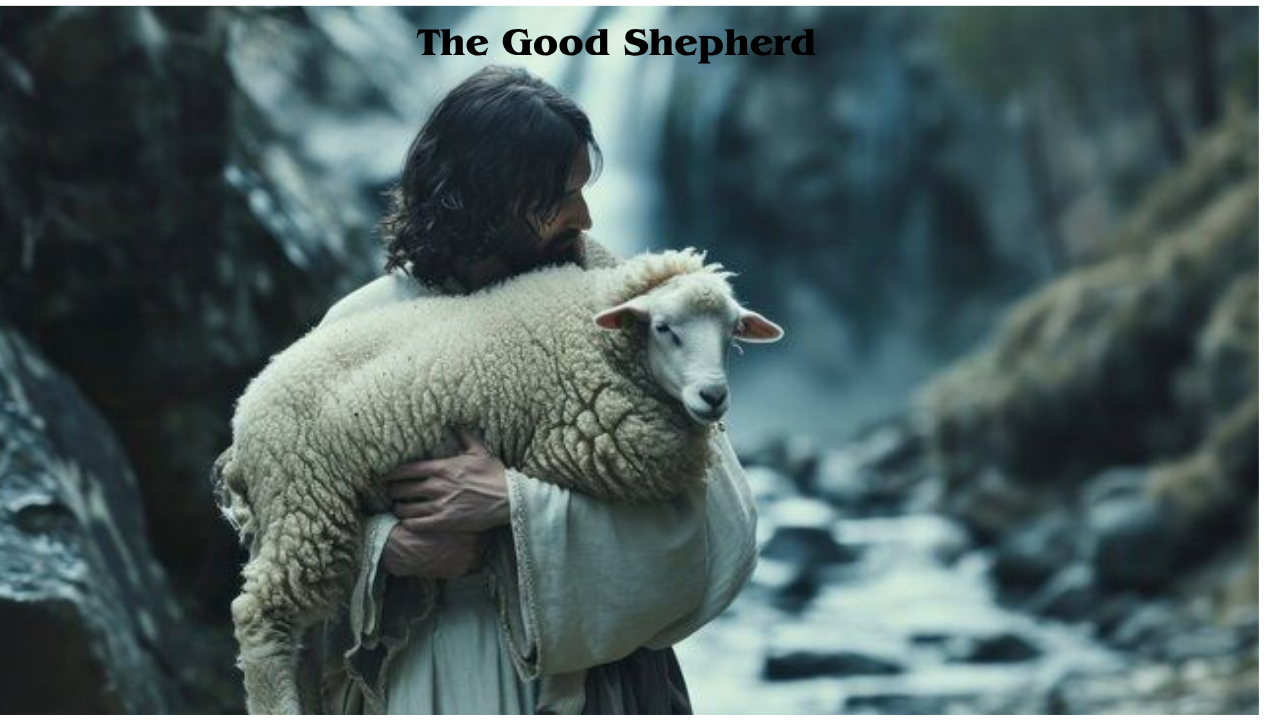
The Good Shepherd

Getting His Sheep Home Safely

In these last few posts I’ve been spending time in Jesus’ “I Am” statements recorded in the Gospel of John.

I started in Exodus 3, where God reveals himself to Moses as “I AM.” The God who is—who depends on no one, and who keeps his promises. And then, in the Gospel of John, Jesus uses that name to describe Himself that is both personal and unmistakably divine.

His hearers knew what He was claiming. And I want to continue with the next I am statement.

We began with, “I am the bread of life.”

And what I’ve noticed is that the next few I am statements don’t just sit side-by-side—they build on each other.

Jesus says, “I am the light of the world.” And you remember what happens there: a man who was born blind receives his sight. The leaders of his synagogue then question him about it.  But instead of rejoicing, they question if he was every really blind. Then they throw him out for speaking up about Jesus.

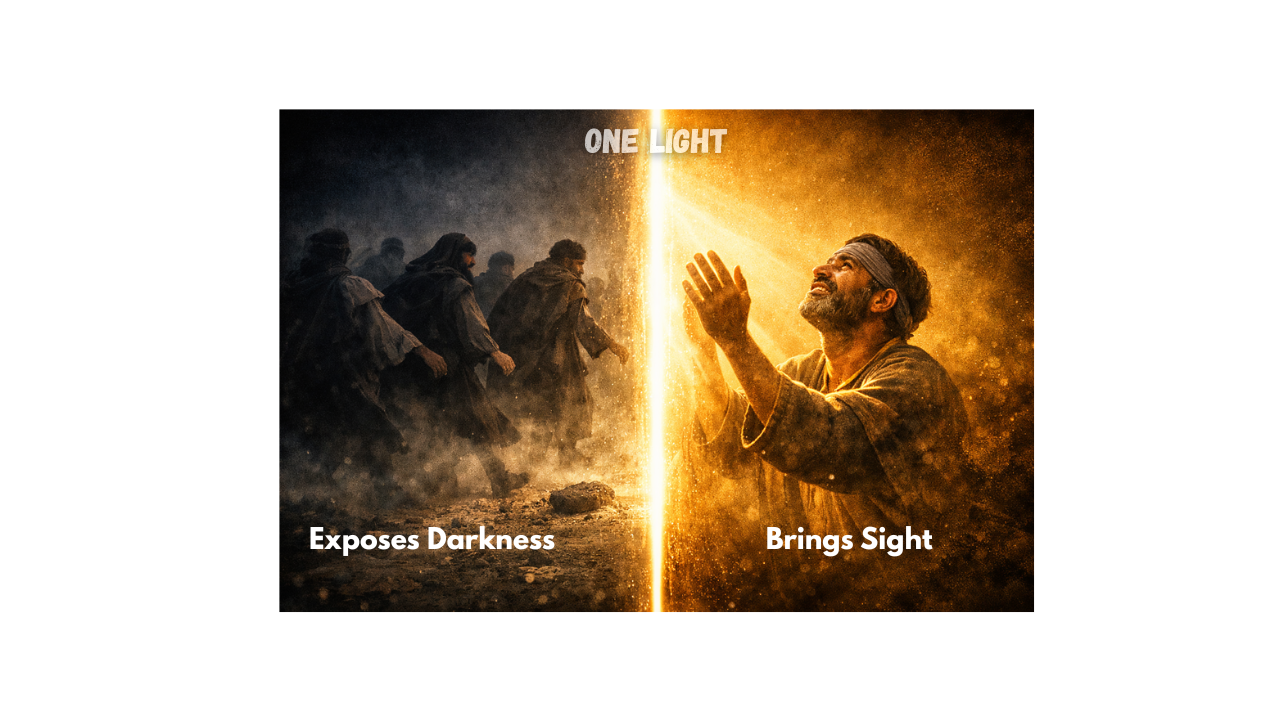
That’s where I said light does at least two things. It illuminates—because when God gives someone eyes to see, they’re drawn to Christ. And it exposes. And when light exposes what’s hidden, it can stir up resistance in people who don’t want their deeds brought into the open.

Then we looked at Jesus’ words, “I am the door.” And again, there are a couple of layers.

First, Jesus is the only entrance into the flock of God. There isn’t another door. There isn’t a side entrance. We don’t climb in by our own effort. If we come to God at all, we come through Christ.

Second, he’s the rightful gatekeeper—the one who admits true shepherds and exposes impostors. So the “light” and the “door” go together. Jesus is saying, in effect, “These leaders aren’t shepherding God’s people in God’s way.” The light exposed their own blindness. And now Jesus says you were never really true shepherds.

Now, that’s not just an issue back then. It’s an issue now.

There are many faithful men today who truly shepherd Christ’s people in humility, sacrifice and faithfulness,  And we should thank God for them.

But there are also false shepherds. Some are blatant—lying, manipulating, using Scripture like a tool to get what they want. They twist the Word, distort it, and sometimes deny it outright. Much like Satan in the wilderness the actually question did God really say that while offering their own spin.

And sometimes it’s less obvious. There can be kind, sincere people who carry the title “shepherd,” but they were never called, and they don’t meet the biblical qualifications for the pastoral office. And I want to say this carefully: sincerity isn’t the test. Effort isn’t the test. Even gifting isn’t the final test. The question is, “Has Christ called this man to this office, and does his life meet the requirements God gives?” You can have shepherd like gifts, but that does not mean you are called to the office or position.

Scripture puts guardrails around the pastorate. The pastoral office is received, not seized. The Good Shepherd calls and sets apart under-shepherds, and he does it with clear qualifications—read 1 Timothy 3 and Titus 1.

And that sets us up for the next “I Am.” Jesus says, “I am the Good Shepherd.” And then He gives a mark that no pretender can fake: “The good shepherd lays down his life for the sheep.”

False shepherds take from the flock. They use the sheep. They harm the sheep. Some even “protect” their system by throwing out the person who simply tells the truth about Jesus.

But the Good Shepherd does the opposite. He gives Himself for the flock.

Now, when you hear “shepherd,” where does your mind go? For a lot of us it’s either the Christmas story—or Psalm 23.

Shepherding in the ancient world had a rhythm. In the morning the shepherd would call, and the flock would follow. During the day he watched them as they grazed, keeping an eye out for strays. He led them to water. And at night he brought them back in and counted them as they entered.

It was hard work. Heat and cold. Long days. Limited food. Predators. Robbers. That’s why shepherds carried a rod and a staff—tools for protection and for guidance.

And a good shepherd had to know the land—where the safe paths were, where the danger was, where the still water and green pastures were. Shepherding wasn’t only physical strength; it was wisdom.

And it required tenderness too, especially with the young and the weak.

Psalm 23 and John 10

Psalm 23 starts like this: “The LORD is my shepherd; I shall not want.” In other words, “Because He’s my Shepherd, I won’t lack what I truly need.” And in John 10, Jesus says the shepherd leads his sheep in and out. He knows them—and they know his voice.

“He restores my soul… for his name’s sake.” Here’s a simple way to think about that: the shepherd’s name is tied to the sheep’s condition. If the flock is neglected, everybody knows it. So the shepherd acts—for their good, and for his name, his reputation.

Then comes that line we all know: “Even though I walk through the valley of the shadow of death…” Notice—Psalm 23 doesn’t pretend the valleys aren’t real. And Jesus doesn’t pretend either. In John 10 he talks about thieves and robbers, about danger at the edges, even danger that tries to slip into the flock.

So yes—it’s dangerous out there. But here’s the comfort: Jesus says He goes before us. He’s with us in the difficulty. And He is committed to bringing His sheep all the way home.

“Your rod and your staff, they comfort me.” Those are tools of guidance and discipline. Because sheep wander. And honestly—so do we. Thieves and robbers aren’t our only threat. Our own selfishness and sinful desires and temptations are always close. We drift. We stumble. We fall.

So the shepherd uses the rod not only to fight off an enemy, but also to correct and recover the sheep. Sometimes correction feels severe—but it’s mercy. It’s the Shepherd refusing to let his sheep destroy themselves. And he doesn’t discipline from a distance. He stays near. He tends. He restores.

It is said that a shepherd if he has a stubborn sheep that keeps straying, will use the rod to break it’s leg. But he does not leave the sheep to suffer the consequences. He then carries the sheep until it is strengthened and has learned its lesson

The rod could also be used to part the wool and inspect for injury or infestation—careful attention the sheep can’t give itself.

Psalm 23 says, “You anoint my head with oil.” Picture the Shepherd applying what heals and soothes—like balm for irritated skin under dirty, matted wool.

And the staff wasn’t just a walking stick. It could pull a sheep back from a ledge, guide it back onto the path, or lift it out when it had fallen.

That’s the Shepherd’s care: protecting, correcting, watching over, and providing—often in the very places where danger is real.

Jesus says the one who follows Him “will be saved and will go in and out and find pasture”… and then he says, “I came that they may have life and have it abundantly.”[1]

And, “You prepare a table before me.” Even with enemies nearby—threats at the edges—the Shepherd is present. And He provides. He does not run off and leave us to fend for ourselves.

So when Psalm 23 says, “Surely goodness and mercy shall follow me all the days of my life,” it’s not wishful thinking. It’s the promise that the Shepherd’s care doesn’t run out.

“Goodness” means God is working for our good—our real wellbeing.

And “mercy” is his covenant kindness—steadfast love, faithfulness, the kind of love that doesn’t quit.

Now, here’s the heart of it. Jesus, the Good Shepherd, gives His life to protect His sheep—from sin, from judgment, and from death. He didn’t die only to show us what love looks like. He died because the danger is real, and because God is holy.

Sin separates us from the Holy God. And we don’t come through the Door on our own merit or qualifications. We need a Shepherd who comes after us—who finds us, guides us, and when we’re too weak, carries us. And the Door He opens is the Door He is.

He was willing and able to lay down his life for the sheep—and to take it up again. He rose from the dead. And right now, he is leading his people home: to the house of the Lord, where we will dwell forever.

He died in our place. And by his death, we are saved.[2]

So if Jesus is the Good Shepherd, what do you do? It’s wonderfully simple: follow him. Don’t go looking for another shepherd. Don’t wander off into the dark, thinking you’ll find better pasture somewhere else. In him you have what you truly need.

When you’re tired, he brings you to rest. When you’re thirsty, he leads you to living water. When you’re unsure, he guides you in paths of righteousness. When you’re afraid, he doesn’t shout from far away—he is with you. Follow the Good Shepherd. And as you follow him, goodness and mercy will follow you all the days of your life. And in his time, he will bring you to his house, where you will dwell with him forever.[3]

Posted in Uncategorized | Tagged , , , , , , , | Leave a comment

The Door is Open

Remember Monty Hall and Let’s Make a Deal—now hosted by Wayne Brady. In the end, after all the wheeling and dealing, the contestant was given one final choice: three doors. Behind one of them might be something better, even life-changing. You had a 33% chance of something better and a 66% chance of losing out

But what if I told you there is a door you may enter that leads to abundant life, and it requires no bargaining, no gambling, and no negotiation at all? It is a 100% guarantees for anyone who enters this door

In John 10 Jesus calls Himself the door. Just before John 10, in John 9, a group of religious leaders cast out a man from their assembly—effectively excommunicating him. Why? Because the man who had once been blind now could see, and he gave Jesus the credit. The leaders would not tolerate that testimony. They claimed to be shepherds of God’s people, but in truth they were failing the flock.

That is the backdrop for Jesus’ words in John 10. He is exposing false shepherds—those who appear to care for the sheep but who, in reality, are false shepherds. Like the leaders who drove out the man healed by Christ, they show themselves to be hostile to the very work of God.

Jesus says that true shepherds are those who come through the door by His calling. Some who claim to be shepherds are not entering rightly. They are thieves and robbers, coming by another way. They have not been called by Christ, but have instead taken a place that was never theirs.

Now I know there are many men who are faithful pastors and elders who are serving Christ’s church with humility, integrity, and sincerity. The Lord has truly called and blessed them in their work. But there are also many who stand in pulpits without having been called by Christ in the manner His Word requires. Some have misunderstood the qualifications for pastoral office. Others have set those qualifications aside to fit the spirit of the age or their own personal preference.

And while God may still bless His Word when it is preached, that does not mean a person is free to claim a role Christ never gave him. A person may see fruit in ministry and yet still act outside the bounds of God’s calling. It is a solemn thing to serve in a way that seems fruitful, yet is not obedient.

There is an account as Moses lead the people to the promised land where the people complain they are thirsty. God tells Moses to speak to the rock and water will come forth. Moses, for whatever reason, strikes the rock. Now water did come out, but Moses would forfeit the blessing of entering the promised land with the people he was leading.

You see, God still blessed as He said He would. But Moses, because he chose to do it his way and not God’s forfeited a blessing.

Someone can be in a pulpit, teaching accurately the word of God. So God will bless His word and the hearer, but not the preacher.

There may be many people who think they are doing right, in their own opinion, but if it does not align with God’s word there is a forfeited blessing.

In the end God can bless His word, because that is where the power is, His Word and His Spirit even while withholding a blessing for the speaker

Jesus then presents Himself not only as the One who protects the sheep, but as the door of the sheep. That is the point I want to focus on now: “I am the door.”

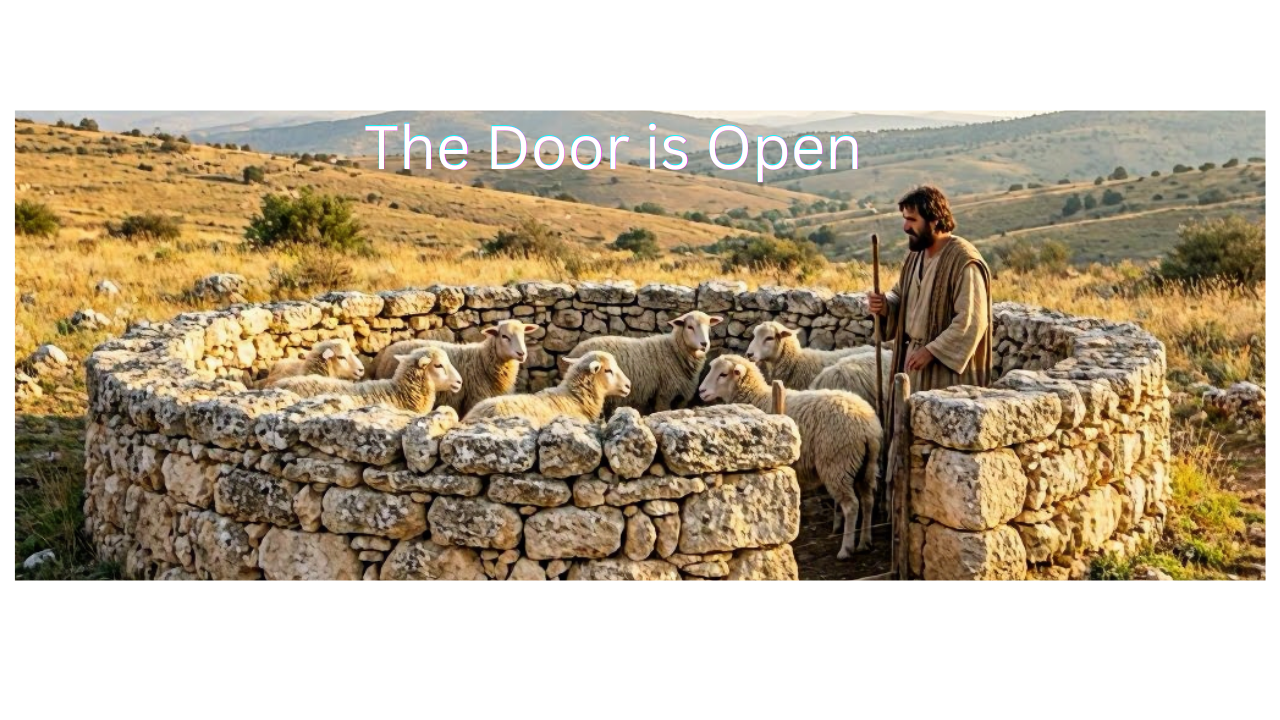
A typical sheepfold in the countryside was a simple structure, often just a rough wall of stones forming a pen with one opening. At night, the shepherd would lie across that opening, becoming the gate himself. In that way, he protected the sheep from wild animals and from thieves. The sheep were safe because the shepherd stood watch.

What do we learn about Jesus when He calls Himself The Door?

First, there is only one door. That means there is only one way to God, and that way is Jesus Christ. The sheepfold had one entrance, not many. The same is true for salvation. Christ does not present Himself as one option among several. He is the only way.

Those who enter this door will be saved and come in and out and find pasture

How can Jesus make such a claim? If He were merely a man, the claim would indeed be absurd. But if He is who He said He is—the eternal Son of God, incarnate for our salvation—then His words are not arrogance; they are truth.

He came into the world to seek and save the lost. And we are all lost. We deserve death for our sin, both physically and spiritually. We deserve separation from God. But Christ, though sinless, took our guilt upon Himself and died in our place. No one else could do this. No one else was qualified. No one else was needed. He alone is the door by which sinners come to the Father.

Second, Jesus teaches that we must enter in. This is personal. It is not enough to admire the door, talk about the door, or stand near the door. One must enter through it. In Scripture, this is the language of faith—coming to Christ, trusting Christ, believing on Christ. Salvation is not inherited, borrowed, or approximated. It is received personally by faith.

And what are the promises of entering this door?

First, Jesus says that whoever enters will be saved. That is a glorious promise. The Savior does not say the path will be easy, or that the sheep will never face danger. But He does promise salvation.

Second, His sheep are safe. They may still walk through valleys, but they do so under His watchful care. He provides for them. He guards them. He keeps them.

Third, His sheep are satisfied. They go in and out and find pasture. They find green grass and still waters. In Christ, the believer finds not only security, but rest for the soul.

This is why the door matters so much. It tells us how we enter God’s presence. Sin has separated us from God, but Christ has opened the way. Through His death, burial, and resurrection, He has made access possible. When Jesus died, the temple curtain was torn, showing that the barrier between God and man had been opened by divine grace. Christ has established that access Himself.

So there are two ideas in Jesus as the Door. He determines and calls those who will be shepherds according to His call, and He is the only way into this flock.

And notice the wording: Jesus does not say He is a door, but the door. That definite article matters. It excludes all alternatives. There are not many doors leading to God. There is one.

This is the invitation of the gospel. The door stands open, and by faith in the Son of God we enter in.

This door is not there to keep people out. The door is not there to separate us from God. It is open to receiving sinners. Yet one day it will be shut. But for now, the door remains open, and the call of Christ still goes out.

There may seem to be many ways into God’s favor, but Scripture is clear: there is one door. We do not choose from among three. We do not bargain our way in. We do not win access by cleverness, effort, or religious performance.

No deal must be struck. No costume must be worn to get the host’s attention. Jesus says, “Come to Me.” He is the door, and access to God is open to all who come in faith.

The only thing we have to offer in trade is our sin. That is the promise. When we bring our sin to the Savior, He paid the punishment for our sin and then escorts us through the door into the abundant life God promises.

More on the Shephard next time.

If you have been encouraged like, share and subscribe.

And leave a comment. Have you come through the door, and if not would you like to?

Posted in Uncategorized | Tagged , , , , | Leave a comment

The Power of Light

The Power of Light

Light has many uses. In fact, one source of light can do many things at once. It can reveal what is hidden, even the things we would rather keep in the dark. It can illuminate a path so that we can see clearly. And some forms of light even have the power to cleanse and disinfect.

Jesus calls Himself the light of the world.

Lately, I’ve been walking through the “I am” statements of Jesus in the Gospel of John. This time, I want to look at the places where Jesus says, “I am the light of the world.” He uses that phrase in John 8 and John 9, and in both passages, we see something different about what He means. As a reminder, all of these “I am” statements point back to Exodus 3, where God reveals His name to Moses as “I AM.”

The people who heard Jesus did not miss what He was claiming, even if we sometimes do. They understood that He was speaking with divine authority, identifying Himself with the God of the Old Testament. In other words, Jesus was making Himself one with the Lord who had revealed Himself to Israel.

Jesus’ main claim is simple and profound: He is the light of the world, and those who follow Him will not walk in darkness but will have the light of life. And while the light is with us, there is work to do.

Jesus also draws a sharp contrast between light and darkness. He shows us that those who walk in darkness or in light are not always who they appear to be. Even Satan and his servants can masquerade as angels of light. They do not appear as the evil, lying, murderous beings they truly are.

John 8 begins with the woman caught in adultery. Yet as Jesus exposes the darkness, what comes into view is not only her sin but the sin of her accusers.

As Jesus writes in the sand, the religious leaders—the supposedly righteous ones—leave one by one. We do not know what He wrote. Perhaps He listed their sins. Perhaps He exposed their hypocrisy. Whatever He wrote, the effect was unmistakable: light had entered the scene, and darkness could not endure it.

Light dispels darkness.

Darkness hates being exposed.

Here, the real issue was not only the woman’s sin, but the Pharisees’ hypocrisy and their refusal to recognize who Jesus is. Jesus did not condemn her, but He also did not condone her sin. He sent her away with these gracious words: “Go, and sin no more.”

So yes, several sins are exposed in this passage. One sinner came into the light and left restored by the Savior. Others left, still determined to destroy Him.

In fact, they would rather kill Jesus than surrender to the light. They wanted to extinguish the light so they could remain in darkness. That is the work of the enemy. He works to snuff out the light at any cost. And in that, it becomes clear that their father is not the Father of heaven, the Father of lights.

The Pharisees respond as though Jesus is speaking on His own and expecting them simply to take His word for it. But Jesus says, “My Father bears witness of Me.” In other words, everything they had seen in Him was already God’s testimony confirming who He is.

Jesus then says plainly that they do not know the Father. In fact, He tells them they will die in their sins because they have rejected the One the Father sent and affirmed.

The rest of the passage makes His claim even clearer. Jesus is the One sent by the Father, the promised descendant of Abraham. The Pharisees claimed Abraham as their father, but their deeds exposed the darkness they lived in.

“If God were your Father,” Jesus says, “you would love Me, for I came from Him and He sent Me.”

Then, in John 9, we meet a blind man. Once again, the religious leaders want to extinguish the light, so they ask, “Who sinned, this man or his parents?” They had a very rigid way of thinking: if someone was blind, then someone must have done something wrong. They could not imagine that God might be doing something far greater.

Jesus has just claimed divine identity. He has tied His authority to Abraham and beyond. And now He performs a miracle to confirm that claim.

The leaders also claimed descent from Abraham, but apart from physical lineage there was little in them that reflected Abraham’s faith. They had missed the point.

So first, the light causes the children of darkness to flee.

Then, in John 9, the light brings healing and sight.

Even when the Pharisees question the man, they refuse to acknowledge what Jesus has done. They insist that he must not really have been blind. They claim to be disciples of Moses, whose God spoke to him, yet when confronted with the work of Jesus, they say, “We do not know this Jesus.”

The blind man responds with striking clarity: why all the confusion? How can they deny what has happened? He knows he was blind, and now he sees. So instead of rejoicing, they call him a sinner, insist he was blind because he deserved it, and cast him out.

Again, as the light exposes their sin, they try to push the light away.

Jesus exposes sin in one group and brings sight to another.

The difference is this: what do we do with the light of the world? What do we do with the word of God revealed in Scripture?

Do we ignore  it and remain in darkness, or do we embrace it and receive sight?

Do we remain blind, or do we allow God to show us His way?

A quick caution: I am not talking about some mystical inner light, or some spiritual power we generate within ourselves. I am using the phrase the way Jesus uses it. Jesus Himself is the light who exposes, cleanses, and heals. This is not something we achieve from within. It is who He is and what He does.

Two challenges to Jesus. Two attempts to trip Him up or expose Him as a fraud. And two times Jesus calls Himself the light of the world—exposing sin and bringing healing, both spiritual and physical.

So here is the choice before us. God has revealed Himself in the past, and He has revealed Himself fully in Jesus Christ. And we still face that same choice today.

There are those who see the evidence and, when the light shines, allow it to expose them. They let that light bring healing and life.

And there are those who try to turn the light off, accuse it, or deny it, because they would rather remain in darkness than let the light of the world bring them life.

Posted in Uncategorized | Tagged , , , , | Leave a comment

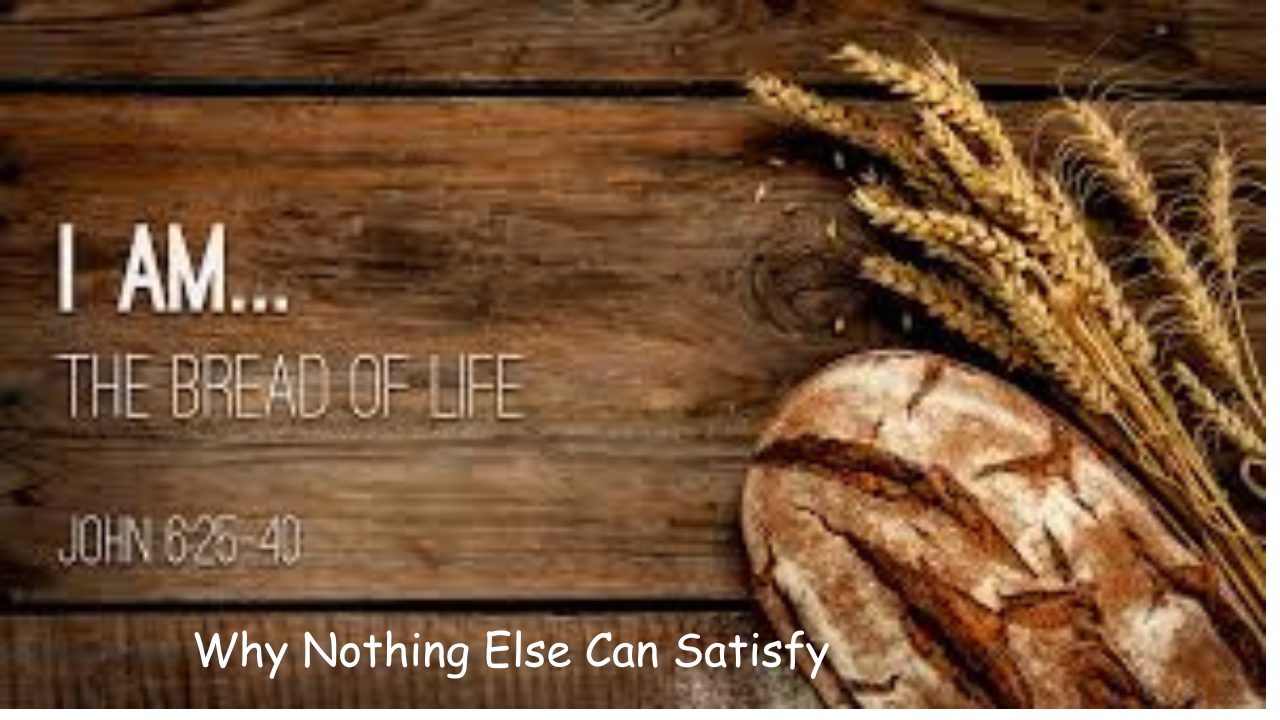
Jesus The Bread of Life

Nothing Else Will Satisfy

We spend our lives chasing things that promise satisfaction, but somehow leave us empty again by morning. In John 6, Jesus speaks directly to that hunger. After feeding the thousands, he tells the crowd they are pursuing the wrong kind of bread — because what they really need is not more stuff, but Him.

The Setting

Jesus has just fed the five thousand men plus most likely their wives and children who were present. This crowd is now following Him everywhere. But Jesus knows what’s really going on.

They don’t want Him — they want what He can give them.

They want full stomachs. They want another miracle. They want benefits without His involvement or presence.

So Jesus stops them in their tracks and says, basically, “You’re chasing the wrong thing.” You seek Me not because you saw signs but because you ate your fill of the loaves.

Something to remember about signs before we go further. Signs are not the main point. Signs point to something greater. Signs are not the real thing; they point to the real thing.

He tells them not to labor for food that perishes, but for food that lasts forever.

In other words: stop living for what fades. Stop giving your life to things that can’t satisfy. Labor for the thing that satisfies and endures to eternal life.

Then the people ask, “Okay, what do we have to do?” How do we get that.

And Jesus answers with stunning simplicity: believe in the one God has sent.

That’s it.

The Challenge

Now the crowd wants proof that Jesus is the one.

They bring up the manna in the wilderness. They say, “Our fathers ate bread from heaven. What sign are you going to give us?”

And Jesus makes it clear: it wasn’t Moses who gave that bread. It was my Father. Jesus again points out the unique, intimate relationship of the triune God. He does not say the manna came from the God of heaven but My Father.

This irritates the crowd later. Who is this? We know His father. It’s Joseph. How can He say He is the one who came down from heaven. They understood Jesus was claiming His deity.

They catch on to what Jesus claims here.

And then comes the statement that changes everything:

“I am the bread of life.”

That means Jesus is not just giving bread. He is the bread.

He is not just offering a blessing. He is the blessing.

He is not just handing out gifts. He is giving himself.

The manna, like the multiplied loaves and fish, were designed to point to the one who gives the gift. They were the sign of something better. They were not the main thing.

Why It Matters

In Bible times, bread wasn’t a snack or something on the side. It was survival. It was not like the bread at a steak house or Olive Garden breadsticks meant to fill you up before the meal.

It was the basic, daily provision people needed just to make it through. It was part of daily life.

Bread was part of every meal. It represented what was necessary to sustain life. It also pointed to God’s power and God’s desire to provide for our deepest needs.

That is why Jesus taught us to pray, “Give us this day our daily bread.” And that is why he also said that man does not live on bread alone. We need more then the physical nourishment but all of God’s presence. It’s not about the bread it’s about the one who satisfies the deepest need.

The crowd in John 6 wanted the opposite. They wanted bread, but not the One to whom the bread pointed. It says in the end of John 6 many left Jesus. They wanted the stuff. They did not want the Savior

And bread only benefits us when it is consumed, when it becomes part of us. In the same way, Jesus is telling us that He came to give us more than something temporary, something that fades, wears out, or loses its appeal. He came to give us Himself.

So we could start life with Him now, to be raised later, and to spend eternity with Him.

Bread represents dependence. It reminds us that we are not self-sufficient. We need God. And God is here. He s the I am right now with you God

Jesus is telling us something even deeper: your soul needs more than physical food.

You can have success and still be empty.
You can have comfort and still be hungry.
You can have money, attention, and influence and still feel like something is missing.

Because there is a hunger inside every human being that only Christ can satisfy.

Jesus says come to Me, and I will provide. Believe in Me and be satisfied.

This is why He came. To bring those who would follow all the way home to the Father, the One who gave you all these gifts.

In a world telling us you should not be satisfied until …

Jesus says I will satisfy your real needs

The Warning

Here’s the warning: we do not get to make up our own Jesus.

A lot of people say they know Jesus, but they really mean they have a version of Jesus they prefer.

I heard one Pastor say when someone tells him I don’t believe in Jesus he asks them to describe Jesus. Because he probably does not believe in that version of Jesus either.

Their version is not the Jesus of Scripture.
Not the holy, sovereign, saving Christ of the Bible.
Just a Jesus that fits their comfort level.

But that is not who Jesus is.

He tells us who he is.

There are many self-professed teachers in churches and online who have exchanged the biblical Jesus for a version of their own design. That is why these “I Am” statements are so important: Jesus reveals Himself. Jesus reveals the truth of who He is

By the end of this message, many people abandoned Jesus. And the same thing happens today. If Jesus does not match what people expect, they want nothing to do with him.

So don’t just take somebody else’s word for it. Don’t take my word for it. Open your Bible. Read John 6. Listen to Jesus speak for Himself.

Read the whole gospel of John. If you want something shorter read Mark.

Let Jesus describe Himself to you.

Application

So let me ask you something:

What are you chasing that cannot satisfy?

What are you calling “bread” that is really just temporary comfort?

What are you feeding on that leaves you hungry again tomorrow?

Jesus is offering something better.

He is offering Himself.

And when you come to Him in faith, you are not just getting relief for a moment — you are getting life that lasts forever.

Closing

The world keeps saying, “You need more.”

Jesus says, “Come to me.”

The world says, “You don’t have enough yet.”

Jesus says, “I am the bread of life.” I am enough for you.

The world says, “Keep searching.”

Jesus says, “I will satisfy you.” I am right here

So don’t settle for temporary bread when Christ is offering eternal life.

To “eat” is to engage, to believe, to come on His terms. It is a deliberate act of receiving the gift He offers — a once-for-all gift.

Our society teaches us to want more, bigger, better, shinier. The media thrives on discontent. Why is there a magazine called Better Homes and Garden? Because the world keeps telling us our home is not good enough. It could always be better. You need better. You deserve better.

But Jesus offers something radically different.

You will hunger and thirst no more

When He says we will hunger no more and thirst no more, He is not promising a life free from trouble, pain, or hardship. He is promising that even in the middle of struggle, we can have true contentment and satisfaction. He will provide what we need to endure. He provides new mercy every morning. (Lamentations 3:22-24)

We do not have to wait until heaven for that gift. He offers it now.

In a world that keeps saying, “You should not be satisfied until you have more,” Jesus says, “I will satisfy your real needs.”

I hope this encourages you. So let me ask.

Where are you looking for satisfaction?

Where have you found a lasting satisfaction

If you would come and take of the bread He offers.

Come to the Bread of Life.

While you partake in this bread remember Create, Don’t Copy

Posted in Article, Uncategorized | Tagged , , , , , , , | Leave a comment

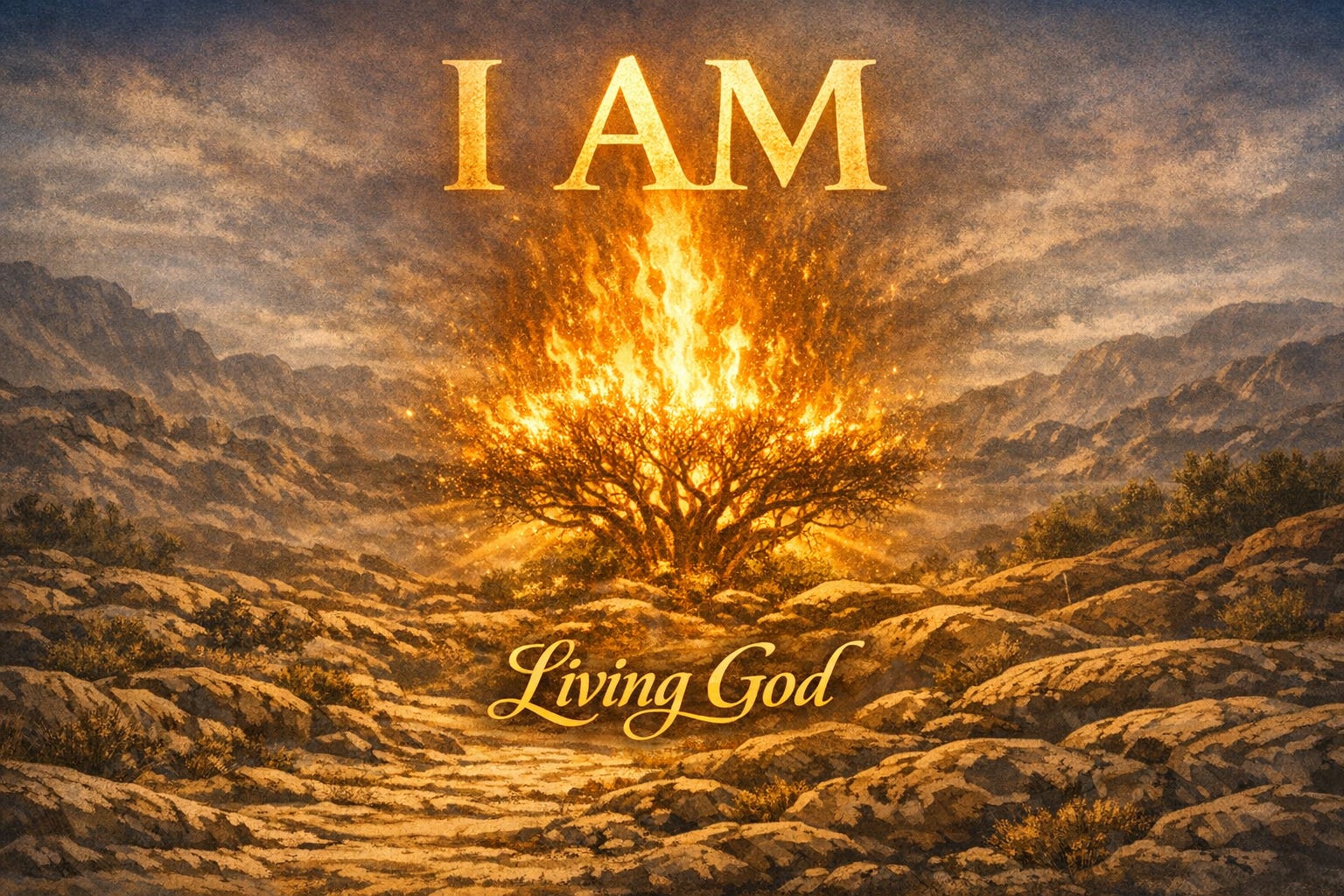
The Living God – I Am

The God Who Is

Hello friends,

What is the point of a faith in God?

Is it something from past days, something we have educated, advanced or invented our way out of?

Is it something reserved for the future, like an insurance policy, just in case I need it as I face the end of my life?

Or is it a very present reality?

After a busy couple of weeks with work and a full Easter season at church, I’m finally able to post again. Even though I didn’t get to share this during Easter week, the message remains just as relevant now.

What I want to reflect on is this: we have a living God, and He is the God of the living.

Let’s begin in Exodus 3. Moses has fled Egypt and is tending his flock when he sees something utterly unexpected. Exodus 3 tells us:

“The angel of the Lord appeared to him in a flame of fire out of the midst of a bush. He looked, and behold, the bush was burning, yet it was not consumed.”
“I will turn aside to see this great sight,” Moses says, “why the bush is not burned.”

A quick note: Scripture sometimes speaks of “an angel of the Lord” and other times “the angel of the Lord.”

  • An angel typically refers to a created angelic messenger.
  • The angel of the Lord is different—a theophany, an appearance of God Himself, even a pre‑incarnate appearance of Christ.

When Moses approaches, God tells him to remove his sandals, and then declares:

“I am the God of your father, the God of Abraham, the God of Isaac, and the God of Jacob.”

Moses hides his face because he knows—this is no mere messenger. This is God Himself.

Later, when God commissions Moses to confront Pharaoh, Moses asks what he should say when Israel asks for God’s name. God replies:

“I AM WHO I AM… Say this to the people of Israel: ‘I AM has sent me to you.’”
“This is my name forever, and thus I am to be remembered throughout all generations.”

God names Himself I AM.

Notice what He does not say. He does not say, “I was.”
So often we treat faith as something belonging to the past—something for previous generations, something tied to “the good old days.” Even churches can feel like monuments to what God used to do.

Do we act as if God is doing something here and now?

Others treat faith as something for the future—something they’ll need “someday,” perhaps near death.

I believe God is very deliberate in this phrase I Am
Yes, He is the God of the past. This is the same God who called Abraham, Isaac and Jacob. The same God who made promises in the past and is reminding us that He is still working to keep those promises in every generation.

God says I AM.

He is the God of the past—Abraham, Isaac, and Jacob.
He is the God of the future—our hope beyond death.
But He is also the God of the present, the God who is at work right now, keeping His promises in every generation.

Israel often asked, “Where is the God who brought us out of Egypt?” And God’s answer was essentially: I am doing something now. You may not see it yet. You may not understand it. You may not even like it. But I AM.

Faith is not merely a memory or a future insurance policy. Faith is a present reality grounded in a present God.


The God of the Living

In Matthew 22, the religious leaders question Jesus about the resurrection. They pose a hypothetical about a woman who was widowed and remarried multiple times—whose wife will she be in the resurrection?

Jesus tells them they misunderstand the nature of the resurrection life. Then He quotes Exodus 3:

“I am the God of Abraham, and the God of Isaac, and the God of Jacob.”
“He is not the God of the dead, but of the living.”

In other words, our relationship with God does not end at death.
Abraham, Isaac, and Jacob are alive to God.
And so will all who belong to Him.

That is the relationship that matters, the one with the covenant God.

There is far more here than a short article can unpack, but this much is clear:
God is real, God is present, and God is near.


When God Feels Absent

There are times when we wonder, Is God here? Where is He? What is He doing?
Scripture never mocks that question. God is not angered by honest wrestling. The Psalms, the prophets, and the history of Israel are full of people crying out:

“God, where are You? We’ve heard the stories of old—but what about now?”

And yet, as they seek Him, they come to see:
God was there.
God is there.
Even when they didn’t see it.
Even when they didn’t understand.
Even when they were angry.

Jesus while on the cross quoted Psalm 22
My God, my God, why have you forsaken me? Why are you so far from saving me, from the words of my groaning?

2 O my God, I cry by day, but you do not answer, and by night, but I find no rest.

3 Yet you are holy, enthroned on the praises of Israel.

4 In you our fathers trusted; they trusted, and you delivered them.

5 To you they cried and were rescued; in you they trusted and were not put to shame. [1]

The whole Psalm is him describing the pain, even feeling forsaken by God. But finding hope in the fact that God is the I Am. The God who is there even in the pain.


Do Not Wait

I want to encourage you: do not wait for some crisis or life‑and‑death moment to seek God. We do not know when those moments will come. God’s name is I AM, not “I was” or “I might be.”

Many saints never saw the full fulfillment of God’s promises in their lifetime. But the name I AM assures us that God will keep every promise—in His time, in His way. That’s not a cliché. It’s a reminder that God works on a timeline we cannot see, and He is present in every moment with covenant faithfulness.

One writer put it beautifully:

Confidence in God’s character—His unwavering covenant love—becomes our only hope for spiritual resurrection now and physical resurrection in the future.


The God of Resurrection Hope

Both God calls Himself, and Jesus call Him “the God of Abraham, Isaac, and Jacob.” That reminds us that we are eternal beings, and that for those in covenant with Him, our relationship with God is eternal as well.

Jesus resurrection proclaims this loudly.
In raising Jesus from the dead, God revealed Himself as the God of life and salvation. Because He is our God, our lives have meaning and direction toward a glorious end. To walk with Him now and life with Him in eternity

The phrase “God of the living” anchors our hope not in wishful thinking but in the unchanging character of the God who never abandons His people and never breaks His word.

He is a very present God—right here, right now, never ending, never changing.

This truth is so central that Jesus uses the phrase “I AM” seven times in the Gospel of John. I hope to write more reflections on those soon.

And there is one final promise—an eighth, if you will:

I AM is coming back.

All Bible References are from the English Standard Version (2025). Crossway Bibles.

Posted in Article | Tagged , , , , , , | Leave a comment

The Visitation

The Visitation — Luke 19

A large portion of the Christian church throughout the world is entering Passion Week—Holy Week. The word passion speaks of suffering. Today, we recognize Palm Sunday, which commemorates the triumphal entry of Jesus Christ into Jerusalem. He comes riding on a donkey, while crowds celebrate, laying palm branches before Him in welcome.

The crowds are not unfamiliar with Jesus. In the account given in Gospel of John, He has just been in Bethany, where He raised Lazarus from the dead. The news has spread. The people are aware that something significant is unfolding—and so is Jesus.

He had already instructed His disciples to find a donkey and prepare for His entry. Nothing here is accidental. He has chosen the day, the route, and even the manner of His arrival. He knows what awaits Him at every step.

The donkey is not incidental; it is deeply significant. It fulfills the prophecy found in Book of Zechariah 9:9:

“Rejoice greatly, O daughter of Zion!
Shout aloud, O daughter of Jerusalem!
Behold, your king is coming to you;
righteous and having salvation is he,
humble and mounted on a donkey,
on a colt, the foal of a donkey.”

This was a royal image. In earlier times, even kings such as King David rode on mules. In that culture, the donkey was a symbol of dignity and kingship. Only later did the horse become the more common symbol of royal power.

Yet the emphasis of the prophecy is not merely on His mode of transportation, but on His character. He is humble. He is righteous. He is the King who always does what is right—the One without sin.

This humility is not what the people expected. It is not what they desired in a king or a deliverer. The term carries the sense of gentleness and peace. He did not come to overthrow the Roman Empire by force, but to reconcile sinners to God.

As John the Baptist declared, He is the Lamb of God who takes away the sin of the world. He Himself said that He came not to be served, but to serve, and to give His life as a ransom for many.

All of this unfolds according to divine purpose, in fulfillment of prophecy.
His position is that of a King.
His character is that of a humble peacemaker.

And we must remember: peace is not the overlooking of sin, of redefining what is wrong and right. Of doing whatever you want without consequence.  It is the reconciliation of those who are estranged—in this case, between God and man.

He came as a King to serve His people and to accomplish what only He could accomplish.

As He entered the city, some responded rightly. They worshiped Him. They acknowledged His works. They recognized who He was—that He was sent from God and that He came to save. This is the meaning of “Hosanna.”

Yet alongside worship, there is opposition. Some demand that the crowds be silenced.

Jesus disrupts the status quo. He draws attention away from the religious rulers. He teaches with authority. He exposes sin. He gathers a following. In doing so, He threatens their position.

In a sense, this is their own “no king” rally. The King arrives, and rather than receive Him, they reject Him. Not only do they seek to silence Him—they will soon seek to kill Him.

And for what reason?
He healed the sick.
He raised the dead.
He spoke truth with authority.
He confronted sin.

Yet they do not want Him—not as He truly is. They want a savior on their own terms: one who affirms them without question, who leaves their sin unchallenged, who conforms to their expectations.

This passage reveals a sobering truth: people do not naturally recognize what is good, true, or right. What is good, even best for them.

We prefer our own way. We resist correction. We do not want to be confronted.

At the end of the passage in Gospel of Luke, Jesus weeps over Jerusalem, saying that they did not recognize “the day of your visitation.”

He is saying, in effect: You do not understand what is being offered to you. You are content with your own way, while I have come to bring you something far greater.

Earlier, in Gospel of Luke 4, Jesus began His ministry by declaring the fulfillment of Book of Isaiah 61:

“The Spirit of the Lord is upon me,
because he has anointed me
to proclaim good news to the poor…
liberty to the captives…
recovery of sight to the blind…
to set at liberty those who are oppressed,
to proclaim the year of the Lord’s favor.”

He declared, “Today this Scripture has been fulfilled.”

Now, at Palm Sunday, we see another prophesy, another visitation—another declaration of salvation, another proclamation of the Lord’s favor.

And yet, the response is rejection by some.

Jesus both begins and concludes His earthly ministry by pointing to the promises of the Old Testament—promises of salvation, restoration, and hope. And yet, He is rejected.

There remains another promised appearing—one not yet fulfilled.

Next time, He will not come on a donkey, but on a horse. He will come not in humility, but in final judgment, to establish His sovereign rule over all creation—the very world He made and came to redeem.

People do not always recognize what is best for them. We cling to our own position, even when we are wrong. As has been said, one may shout loudly and still be wrong at the top of your voice.

But for now, the offer remains.

There is still a call to return.
There is still an invitation to receive the favor of the Lord.
This is still a day of salvation.

As Epistle to the Hebrews warns, we must not neglect so great a salvation.

Jesus wept over the lostness, blindness, and confusion of His people. Yet He extended—and still extends—the call to come to Him.

And so the question remains:

Will I stand among those who seek to silence Him?
Will I join the crowd that cries, “Crucify Him”?
Or will I cry out, “Hosanna—blessed is He who comes in the name of the Lord”?

Posted in Article | Tagged , , , , | Leave a comment

No Neutral Ground

Our church has been walking through the final days of Jesus’ earthly life—those moments leading up to the crucifixion.

Recently, we looked at His betrayal. This week, we stepped into His first “trial,” His appearance before Caiaphas.

It’s a striking scene. The religious leaders are scrambling, trying to piece together accusations, looking for eyewitness testimony—anything that will stick. Eventually, they settle on this claim: that Jesus said He would destroy the temple and raise it again in three days.

But the moment really turns when the charge becomes blasphemy.

Caiaphas looks at Jesus and essentially says,
“Tell us plainly—are You the Messiah, the Son of God?”

In other words: Swear to God… are You God?
There’s almost a weighty irony in that moment—asking God to swear by God.

And it raises a question for us:

If you were there… what would you say?
If you were in that courtyard, called as a witness—how would you testify about Jesus?

brown mallet on gray wooden surface

Because here’s the reality: today, just like then, there are countless opinions about who Jesus is. But when it comes to Him, there really isn’t a safe, neutral middle ground.

A lot of people try to settle there.
“He was a good man.”
“A moral teacher.”
“A positive influence.”

But that option doesn’t hold up under His own words.

As C.S. Lewis put it in Mere Christianity, we’re left with what’s often called a trilemma:

  • Liar — He knew He wasn’t God, but claimed to be
  • Lunatic — He believed He was God, but was delusional
  • Lord — He is exactly who He said He is

If He’s a liar, He’s not a good teacher.
If He’s a lunatic, He’s not someone to follow.
But if He is Lord… then there’s really only one right response.

Some will say, “Jesus never actually claimed to be God.”

But when you look at Scripture, that’s hard to maintain.

John 1:1 is technically not Jesus speaking of Himself says In the beginning was the Word, and the Word was with God, and the Word was God.

John 4:25-26 says The woman said to him, “I know that Messiah is coming (he who is called Christ). When he comes, he will tell us all things.” 26 Jesus said to her, “I who speak to you am he.”

John 8:58 Jesus said to them, “Truly, truly, I say to you, before Abraham was, I am.” 59 So they picked up stones to throw at him, but Jesus hid himself and went out of the temple. [3]

The Jews know what Jesus was claiming, deity.

The passage I mentioned earlier And the high priest said to him, “I adjure you by the living God, tell us if you are the Christ, the Son of God.” 64 Jesus said to him, “You have said so. But I tell you, from now on you will see the Son of Man seated at the right hand of Power and coming on the clouds of heaven[4]

At least 7 times Jesus described Himself as I am…

The people around Him understood exactly what He was claiming. That’s why they called it blasphemy. That’s why they wanted Him dead.

Many people had claimed to be messiahs before.
But not like this.
Not with these claims.
Not with this authority.

So again, we’re brought back to the courtroom.

This is a trial. Witnesses are speaking.

If you were called to be a witness what would you say?

If you were on the jury… what would your verdict be?

Because this isn’t just a historical question—it’s deeply personal. It is the difference between life and death

Who do you say Jesus is?

And we’re not left guessing. We have the testimony of Scripture. We have His own words.

I would just gently caution you: don’t base your answer only on what others say about Jesus—whether positive or negative. Go to the source. Look at His life. Listen to His words.

After all, none of us would want people forming conclusions about us without ever hearing from us directly.

So why would we do that with Him?

Do we really want to stand before Jesus one day and say,
“I know what You said about Yourself… but I assumed You didn’t really mean it”?

Some argue the writers exaggerated His claims.
But then you have to ask—does that line up with what we actually see?

One time Jesus described Himself as “gentle and lowly in heart.” Come to me and I will give you rest.
Not weak—but humble.

And yet, look at what He endured.
Look at His strength under accusation, betrayal, and suffering.

So what’s really happening here?

Did His accusers get it right?
Was this a just execution?

Or… was something far deeper unfolding?

That the Lamb of God was taking away the sin of the world.
That He was stepping into death then resurrection… to bring us life.

There is a question we all have to answer, either as a witness or jury member is, There isn’t an in-between option. It is a yes or no question.

Either Jesus is who He said He is—and we submit to Him…
or He isn’t—and He should be ignored, even rejected.

But neutrality isn’t on the table.

It’s a courtroom.
There are only two verdicts: guilty or innocent.
No plea deals. No middle ground.

And this tension isn’t new.

In the ancient world, people were often fine with you believing in Jesus—
as long as you didn’t claim He was the only Lord.

You could add Him to your list of beliefs.
Just don’t make Him exclusive.

But Jesus didn’t leave that option open.

The message wasn’t “Jesus is a lord.”
It was—and is—Jesus is Lord.

Not Caesar.
Not Herod.
Not Abraham, Moses, David
Not Allah, Mohammed or Buddha

And throughout Scripture, God declares,
“I am the Lord, and there is no other. I will share My glory with no one.”

So we’re left with a decision.

Will we acknowledge His claim… or reject it?

But again—there is no middle ground.

And here’s the beauty of the gospel in all of this:

Has there ever been a god who willingly stepped down from glory…
to pursue people who wanted nothing to do with Him?

Who endured betrayal, rejection, and suffering…
not to condemn—but to save the betrayer, the one who spat on Him or mocked Him?

That’s what Jesus did.

The Son of God came to seek and save the lost.
To give His life as a ransom.

We may want a version of Jesus who is simply agreeable—
who affirms everything, overlooks everything, and lets everything slide. We wrongly call that loving.

But that’s not the Jesus we meet in Scripture.

Yes, He is love.
But love doesn’t ignore truth.

Real love tells us when we’re wrong.
Real love calls us to change—to repent.
Real love leads us to something better.

To green pastures.
To still waters.
To life with Him.

So once again, the question stands:

If you were in that courtroom… what would you say?

As a witness.

As the jury.

Because you are both. To testify of what you think or believe about Jesus, and what you think should be done with Jesus


[1] The Holy Bible: English Standard Version (Jn 1:1). (2025). Crossway Bibles.

[2] The Holy Bible: English Standard Version (Jn 4:25–26). (2025). Crossway Bibles.

[3] The Holy Bible: English Standard Version (Jn 8:58–59). (2025). Crossway Bibles.

[4] The Holy Bible: English Standard Version (Mt 26:63–64). (2025). Crossway Bibles.

Posted in Uncategorized | Tagged , , , , , , | Leave a comment

Creativity and the Digital/Human Connection

Reflections on AI, Creativity, and the Human Touch

Welcome back. This is a second post about digital tools, AI, and creativity.

This part came up while I was writing the first post. I didn’t want to turn that into one long, rambling piece, but it got me thinking more deeply about the role of AI—especially in content creation, artistic expression, and the human element, the human interaction.

As I said in my other post, I use digital tools. I’m not opposed to them. I use them in my recording process, my editing, graphic design, and other areas. For years, I was very much a snob purist—“you don’t do that.” Then I started recording and posting and realized that a little help, used as a supplement, is okay. It’s not the main driver, but it can be useful. I’m also fine acknowledging when those tools are being used.

What I started thinking about, though, was the difference between digitally generated creation and digitally enhanced creation. How does digital technology impact the human part of what we make?

For me, I’ve always felt that the more human element involved, the better.

I heard an interview with Joe Walsh (James Gang, The Eagles) that he’s shared in a few places. In the context of The Eagles, he said something to the effect that there isn’t a single Eagles recording or performance that was perfect. There were always imperfections: a note that didn’t land quite right, a transition that was just a little off. That’s the stuff humans do—and that’s what gives their music its mojo.

That human element is something a computer can’t truly replicate. They didn’t go back later and try to “fix” everything to remove those little mistakes—if we want to call them that for this conversation.

That idea really stuck with me. You should be able to play, record, write, and create without being afraid to let the human element show up, instead of using digital tools to sanitize the final product and make it perfect. That thought just kept rolling around in my head.

Now, I’m not saying that “in-the-box” creation—using only digital tools—is wrong or bad. It’s not my preference, but there are some very talented people doing it. I’m also not saying that those who work that way lack skill or talent. I just think there’s something more impactful when you can hear and sense the humanity in the creation.

Maybe that’s because of how God made us. As you know, my faith is important to this channel. The Bible says we are made up of a physical body, and then—depending on how you read certain passages—either body and soul, or body, soul, and spirit. Regardless of how you land on that, I do think there’s an emotional and psychological connection between human creation and how we receive it.

I don’t have definitive research or scientific studies to back this up—this is just my opinion. But I don’t think we need digital tools to erase the human part of creation.

One article called it presence. I know there is not a human presence producing that sound.

In the early days of the pandemic there was research showing that in virtual meetings our eyes may see faces, but we know they are disembodied. Those people are not really in the room with us. And it had a negative effect.

There was another interview I heard, this time with Joe Bonamassa and Dion. If you’ve never listened to Live from Nerdville, Joe Bonamassa is a great interviewer and asks really good questions about guitar, music, and the whole creative process. In one of his early interviews—I think it was with Dion—they talked about recording and performing “back in the day.”

There were no in-ear monitors, no backing tracks, no prerecorded parts. You had stage noise, amplifiers, a live drum kit, monitors, and crowd noise. And yet, those guys hit the mark. They hit the notes. They nailed the transitions. Yes, they were human, and you could tell it was a human live performance—but you had to have the chops. You had to sing the notes, play the notes, and hit the changes, because nothing was running through a computer to fix things before they reached the listener’s ears.

I found that really interesting. Again, I’m not saying that performers who use modern tools lack talent or skill. But back then, you really had to hit the mark—or people knew. Audiences were forgiving, but they knew you were actually up there performing, not lip-syncing and dancing along to a recording.

And again, I think that comes back to the human aspect: the highs and lows, fast and slow, tension and release. All of that factors into what makes good art and good music.

Andrew Peterson once said that when people ask him what kind of music he likes, he replies, “I like good music.” He doesn’t pick a genre or a style. If it’s good, it’s good music. I like that. In the end, we all decide for ourselves what we think is good.

So I’ve been thinking a lot about digital and AI-driven music and art creation, and the differences that might exist. Then another thought crossed my mind and ruminated for a few days:

Is there a connection between the longevity of a song, an artist, or a creative work—and the human element involved in its creation?

I started thinking about songs that were popular when I was a teenager in the 20th century. Yes, the 1900s. Songs we’re still listening to today: Pink Floyd, The Eagles, Dionne Warwick, Patti LaBelle, Robert Johnson, The Rolling Stones, The Who, Chuck Berry, Little Richard, Elvis Presley. That music is still popular—not just with us, but with our kids and grandkids.

I wonder if some of the music being written, recorded, and performed today will still be around five years from now… or fifty years from now.

In the Contemporary Christian or Praise &Worship realm I think they estimate a song has a life span of 3 years.

How many bands today are doing 50th anniversary tours of an album? They’re doing that because people are still buying that album decades later. And it’s not just the same people—it’s new generations discovering the music their parents and grandparents listened to.

Is there a connection between that longevity and the fact that much of that music was made before digital workstations, Auto-Tune, and heavy sampling? It was people sitting in a room, hashing out ideas, scribbling on paper, picking up guitars, hitting strings, hearing the sound in real time, building songs together. They banged on drums, played keyboards, blew into saxophones—people interacting with each other in a live setting and capturing what came out of those sessions. The human element.

Rick Beato has talked about this when evaluating popular songs on Spotify. Some of them are hugely popular and get massive play counts. They’re simple—not bad, just simple in melody, rhythm, and lyrics. Then he looks at the songwriting credits and sees 10 or 12 people listed. You start to wonder how much input each person had, and how much was generated through the process, versus three or four people sitting in a studio, hashing out ideas, writing the song, maybe bringing in a few studio musicians, putting a mic in front of an amp, miking the drums, recording to tape, and saying, “That’s it. Press the album.”

That got me thinking about the human element in music that we’re still listening to today—and about my own experience.

One of the first albums that truly blew me away and hooked me on this music journey was Leftoverture by Kansas, specifically “Carry On Wayward Son.” I remember the first time I heard that opening vocal, then the guitar kicking in. I was done. Hooked.

I can still picture it clearly: probably 13 or 14 years old, lifting the dust cover on the turntable, putting the album down, dropping the needle on the opening track. The world went away, and I went on that journey with the music. It was physical as much as it was auditory.

When Kansas released Point of Know Return, I didn’t put Leftoverture on a shelf or toss it in a pile to give away. When Audio-Visions came out, I didn’t get rid of Point of Know Return. Same thing with Rush: when I bought Moving Pictures, I didn’t stop listening to Permanent Waves. I built a collection. I didn’t replace last year’s music with this year’s release.

There was something about the physical act of listening—vinyl, cassette, 8-track—putting it on, pressing play, sitting down, and really listening.

Now, with digital music, we don’t really do albums the same way. We pick songs and build playlists, and that’s fine. I’m not saying we shouldn’t go digital. But I do wonder: if Point of Know Return came out today, would Leftoverture just get buried somewhere on a hard drive? Forgotten as the playlist updates to whatever’s newest and most listened to?

Is there something about the physical nature of how music was written, recorded, and listened to that affects how deeply it sticks with us. The journey to the store. Searching for the one you wanted or seeing what else was there.

Getting home. Opening it. Or opening it in the car.

Reading the liner notes and checking out the art.

The physical process of putting it on a turntable, or tape player and hitting the controls compared to hitting shuffle and moving on.

I don’t know. These are just thoughts.

Out of curiosity, I looked up the Top 10 Billboard songs for this week in 2026. I wasn’t familiar with many of them. I recognized some of the artists, but most of the music isn’t in the style I typically listen to. That’s partly just me and my taste.

Then I looked at the same week in 2025. Same thing. Not much repeat or carryover

Then I looked at this week in 1979. I would’ve been 16. As soon as I saw the list—songs like “What a Fool Believes” by The Doobie Brothers and “Sultans of Swing” by Dire Straits—I realized people are still listening to those songs today. I still hear them played in all kinds of settings. Not just us 20th century people but new generations.

Will the songs that top the charts today still be listened to by our kids and grandkids? Or will they be going back to Rod Stewart, Dire Straits, The Doobie Brothers, Pink Floyd, Elvis, Dionne Warwick, Tina Turner, Chuck Berry, and Kansas?

Is there a connection there? The human element or the digital creation.

One last side note: as I read the Top 10 Billboard list from March 12, 1979, I couldn’t help but hear those words in the voice of Casey Kasem—or Dick Clark. You can’t separate those charts from those voices.

So yeah—this has been a bit of rambling reflection. I keep coming back to the question of whether there’s a difference, and whether it matters, between hands-on, human-made, analog artistic creation and computer-generated or heavily digitally enhanced creation.

What are your thoughts?

Does music—or any art—resonate differently when you know it was created by a person, through physical effort and human interaction, maybe enhanced a little by digital tools? Or does it feel the same when the end product is generated primarily through cut, paste, sample, prompts and algorithms?

I’d genuinely love to hear what you think.

        Don’t use the digital world to correct or fix your human element.

You are made in the image of God, a creator God

So Create, Don’t Copy

Posted in Article | Tagged , , , , , , | Leave a comment

Using AI and Digital Tools in Content Creation

Today’s post is going to be a little different. I won’t be referencing a song in this presentation. Instead, I wanted to talk for a bit—maybe even ramble a little—about how I use digital tools and AI in the content I post online.

I’m not here to argue whether these tools are right or wrong, whether everyone should use them, or how much they should be used. My goal is much simpler: transparency. I want to be clear about how I use these tools in my content creation.

A computer chip with the letter ia printed on it
Photo by Igor Omilaev on Unsplash

In the end digital tools and AI are amoral and have no ethics. While the developers can program some bias, it is the user who brings the morality and ethics. And like all of God’s gifts, they can be used or abused.

Fire is good for light, warmth and the absolute best way to cook a steak and other meats. Used irresponsibly or maliciously and it is destructive.

God gave people wisdom to take various elements around us and create medicines that relieve pain, cure disease and improve quality of life. Used carelessly or maliciously they create addiction, pain and even death.

God gives us sex for both pleasure and procreation within marriage. But used outside its design leads to confusion and other problems.

And digital tools, in the end, their benefit or danger is in the hands of the user.

If you want the “too long; didn’t read” version, here it is:

I use digital tools and AI to fill gaps where I lack certain skills, resources, or time.

Before I go any further, I want to clarify something up front. When I refer to AI, I’m usually talking about ChatGPT and Copilot. I’m not sponsored by them, and I’m not endorsing them—they just happen to be the tools I default to.


Likewise, I use Fender Studio Pro, various plug-ins, and Canva, simply because those are the main platforms I use.

I also use OBS to record video and DaVinci Resolve to edit video/audio to create the video.

And I use Logos Bible Software.

Also, everything I’m about to share applies only to my social media and creative content—not how I might use these tools in my day job or in areas like Bible study or sermon preparation.

Music Production

The first area I want to talk about is music creation, because this has the biggest impact on my YouTube channel, Common Man Guitar. That’s where I post original instrumental music alongside my content.

I play guitar, and by default that means I can play some bass as well. So any guitar—and most bass—you hear in my recordings is me playing those instruments. I write the music, and I play the parts.

Sometimes I record through a pedalboard into an amplifier that’s mic’d and then routed into my recording software. More often, though, I plug directly into my interface and record straight into the software.

I use multitracking, just like musicians have been doing since Les Paul developed it back in the 1940’s.

I might record multiple guitar tracks and pan them left and right, each with slightly different tones. Sometimes I’ll add a subtle part in the center just to fill out the sound. I use pedals and plugins to simulate different amps and effects, but the playing itself is mine.

For other instruments, I use a MIDI keyboard controller connected directly to my recording software. I know enough music theory to play melody lines and basic chords, and then I experiment with the software to determine what instrument those notes sound like. One part might end up as a saxophone, another as a pad, a Hammond B3, or a piano.

If you’ve ever worked with recording software, you know you can spend days auditioning sounds—from orchestras and choirs to bird chirps and car crashes. I keep it simple. I choose basic instruments that let me add a melody or hook to support the song. Again, I’m playing the notes I wrote—the software is just capturing and shaping them.

Drums and Percussion

This is where things are completely digital.

I am not a drummer. I don’t play drums. I don’t own drums. I struggle to keep time, and while a metronome is great for practicing strumming or picking technique, it doesn’t work well for me when I’m writing and recording songs.

Inside my recording software, I use drum plugins and instruments. I drag and drop patterns to create basic drum tracks for verses, choruses, intros, outros, and bridges as I arrange the song. These drums are samples and loops—I select them, arrange them, and build a track, but I don’t play the parts myself.

Once the drum track is in place, I record everything else with it.

So when it comes to music production, these digital tools aren’t replacing my creativity or playing—they’re filling in gaps where I don’t have the tools.

Graphics

Another area where I use AI and digital tools is graphics, primarily for YouTube thumbnails.

When I can, I’ll jump into Canva and build something myself—choosing backgrounds, images, and layouts. Other times, I’ll use an AI tool to help generate ideas. I’ll describe what I’m trying to create, and the AI will suggest colors, fonts, layouts or images. Sometimes I’ll even ask it to generate an image.

For example, I recently posted a video and song based on Judas and Jesus in the Garden of Gethsemane. I prompted the AI with the theme, title, and overall idea. It gave me suggestions for color schemes, fonts, and imagery. From there, I generated an image and then tweaked it—adjusting details where the characters didn’t quite look right.

I use AI here because I’m not a graphic designer, and I’m not at a point where I can hire one. My daughter designed the logo for the YouTube channel, but that was a one-time thing—I can’t have her doing all my graphics.

I also use digital tools when I need slides for a video—things like end screens, “subscribe” prompts, quotes, or Bible verses. Canva and Logos Bible Software both make that pretty easy.

For Substack or my website, I usually stick with stock or public-domain images that fit the theme of what I’m writing.

Again, this is about filling gaps where I don’t have the skills or resources to do everything myself.

Editing

This is the last area I want to cover.

I write my scripts. I write my posts. Just like I write my songs. In most cases, the text is the same whether it’s for the YouTube script, Substack, or my website—though I might tweak it slightly for spoken delivery.

After I’ve written everything, I’ll sometimes use AI for research and verification, especially when I want to make sure I have facts or references correct. Logos Bible Software, for example, helps me find verses and understand context. In the Judas post, I used it to confirm where Judas is referred to as the “son of perdition” and how that term is used in context.

Once the content is written, I’ll paste it into an AI tool and ask it to check for spelling, grammar, and typos. I may also ask it to make the text more conversational, more professional, or more impactful.

Just like I did for this post.

Then—and this part is important—I compare the edited version to my original. Sometimes the AI nails it. Other times, I’ll read something and think, Anyone who knows me knows I don’t talk like that. When that happens, I put my original wording back in.

I’ve also noticed that AI will occasionally leave out something I consider important. When that happens, I make sure it gets added back in.

At the end of the day, this is still my message, my point, and my voice. The AI is just helping me polish it.

Conclusion

That’s really it. That’s how I use digital tools and AI in my social media content, presentations, and posts.

The work is mine—the ideas, the writing, the playing. These tools simply help me fill gaps in skills and resources. I don’t have an editor, a graphic designer, a producer, or an engineer. It’s just me, my guitar, my laptop, and a few additional tools like pedals and a keyboard.

And the digital tools.

I’ll admit, the temptation is always there to let AI write a song or generate content based on a theme or genre. But I don’t do that. I want this to be my message, presented in a way that’s accurate, coherent, understandable, and hopefully helpful.

I’m not recommending that you do things my way. I’m not saying my way is the best or the only way. You may use these tools far more extensively—and that’s your choice. You may avoid them entirely—and that’s fine too. It’s your message and your voice.

For me, transparency matters. I think it’s important to acknowledge where and how these tools are used. This idea was inspired by an interview where Joe Bonamassa and Ian Scott I think mentioned that concert tickets should disclose how much of a performance is prerecorded or tracks. I actually agree with that idea.

I’ll be doing another post soon about the human/digital connection in content creation and creativity. That comes from a comment by Joe Walsh about how the computer/digital process strips away the human connection, the mojo of the music when it is sanitized and perfected to remove all the human presence,

I want to be able to say: This is my voice. This is my message. This is my song. And yes, I used tools to fill in some gaps.

I’d love to hear from you—drop a comment and let me know how you use AI or digital tools. Do you use them extensively? Do you just dabble? Or are you completely opposed to them, and why?

And while you’re at it, hit the like and subscribe buttons—they really do help. You’ll also find affiliate links in the description for things like Amazon or Cable Free Guitar. Those commissions go right back into supporting my platforms with no additional cost to you, and I truly appreciate it.

However you approach these tools, remember:

Create. Don’t just copy.

Posted in Article, Uncategorized | Tagged , , , , , , , | Leave a comment

Jesus, Judas, and Us

This post didn’t start out the way I planned.

I had an idea forming, but between work, life, and distractions, it never quite came together. I made some progress, but I wasn’t confident in the direction—so I was late getting it finished.

Then, sitting in church this morning, everything changed.

The sermon was from Matthew 26, focusing on the betrayal of Jesus by Judas. When the pastor reached Judas’ kiss, something struck me with fresh weight:
Judas is not just a villain in the story—we see ourselves in him.

WE all know Judas. But what if the real danger is not in being betrayed, but being the betrayer.

So often when we talk about Judas, the focus is on how we can be betrayed by people close to us. But Scripture presses us to look deeper—to ask how we, too, are capable of betraying the God of the universe.

Judas Had Every Advantage

Judas wasn’t an outsider.

He was invited into Jesus’ closest friends. He walked with Christ. He heard Jesus’s words firsthand. He listened as Jesus said:

Judas saw and heard everything

  • “Blessed are the poor in spirit.”
  • “Come to Me, all who are weary and heavy laden, and I will give you rest.”
  • “I am the way, the truth, and the life.”

Judas saw the blind receive sight.
He watched demons flee.
He felt the boat steady as the storm was silenced.
He saw Lazarus walk out of the grave.

And yet—something was off.

Maybe Jesus didn’t meet Judas’ expectations.
Maybe the cost of discipleship was too high.
Maybe it wasn’t high enough.

We’re not told.

What we are told is this: for a handful of silver, Judas turned a moment of intimacy into an act of betrayal. A kiss—meant for affection—became an instrument of treachery.

The Graciousness of Christ

One of the most sobering realities in this account is the grace of Jesus.

Jesus knew what Judas would do.
And still—He welcomed him.
He taught him.
He blessed him.
He treated him no differently than the others.

That should stop us in our tracks.

Everyone Wanted Jesus Silenced

When you step back, you see four groups involved in Jesus’ death:

  1. Judas – a close companion
  2. Religious conservatives – the Pharisees
  3. Religious liberals – the Sanhedrin
  4. Secular authorities – the Romans

Different beliefs. Different motivations.
One shared goal: silence Jesus.

Not much has changed.

Some churches abandon the authority of Scripture because Jesus doesn’t align with cultural expectations. Others believe He isn’t strict enough—or that He’s too strict. And many in the secular world wish He would simply disappear altogether.

Yet the irony remains: people work incredibly hard to get rid of someone they claim doesn’t exist.

The Kiss of Death

Judas received countless blessings—yet he saw himself as his own master.

His kiss looked like devotion, but it was hollow. Scripture warns us about this kind of faith—“having the appearance of godliness, but denying its power” (2 Timothy 3:5).

Earlier in that passage Paul speaks of difficult days, people will be lovers of self, lovers of money and a whole list of what looks like today’s news reports. And it says they oppose the truth and disqualify their faith.

This is the danger of hypocrisy:
looking faithful while rejecting the truth, redefining Christ, and hollowing out the gospel.

Judas’ later sorrow was real—but it wasn’t repentance. The apostle Paul speaks of a sorrow that does not lead to repentance. Feeling bad is not the same as being transformed.

The Judas in Us

This is where the story turns uncomfortably personal.

  • We’ve received forgiveness—but refuse to forgive others.
  • We’ve been accepted by God—but withhold acceptance from those we dislike.
  • We’ve received generously—yet resist giving sacrificially.

We enjoy the blessings of God while resisting His authority.

The sin that ultimately condemned Judas wasn’t the kiss.
It wasn’t the betrayal itself.
It was refusing to believe—to receive mercy—to trust Christ for salvation.

Mercy Still Speaks

Here is the good news:
our betrayal does not have to be the final word.

No matter how deep the failure, God’s mercy is greater.

During Lent as Christians reflect on Christ’s Passion (suffering), we’re reminded not only how painful our sin is—but how far Jesus was willing to go to redeem sinners.

What then shall we say to these things? If God is for us, who can be against us? 32 He who did not spare his own Son but gave him up for us all, how will he not also with him graciously give us all things? 33 Who shall bring any charge against God’s elect? It is God who justifies. 34 Who is to condemn? Christ Jesus is the one who died—more than that, who was raised—who is at the right hand of God, who indeed is interceding for us. 35 Who shall separate us from the love of Christ? Shall tribulation, or distress, or persecution, or famine, or nakedness, or danger, or sword?[1]

“If God is for us, who can be against us?”

Christ was not spared—so that mercy could be offered freely to all who repent and believe.

The question Judas leaves us with is simple—and urgent:
Will we receive Christ, or merely remain close to Him?

“We all know Judas. But what if the real danger isn’t being betrayed… it’s being the betrayer?


Judas saw everything. He heard everything. He walked with Jesus. And yet—he never truly believed.

That should terrify us.

You can be close to Jesus.
You can know the language.
You can enjoy the benefits.
And still miss the gospel entirely.
We redefine Jesus. We soften His words. We ignore obedience—while still enjoying His blessings.

That’s Judas-like faith.

The issue was never access.
It was never knowledge.
It was a heart that refused to submit in faith.

Salvation is not proximity to Christ—it’s union with Christ.


[1] The Holy Bible: English Standard Version (Ro 8:31–35). (2025). Crossway Bibles.

Posted in Article, Uncategorized | Tagged , , , , , , , , | Leave a comment